Fleet Electrification in 2026: Why UK Commercial Operators Are Finally Making the Switch
Fleet electrification has stopped being a "someday" conversation. UK fleets now account for over 60% of new EV registrations, and per EY analysis, more than 75% of new corporate car registrations in 2025 were electric — driven by cost, not just climate targets.

First published onLondon EV Show ↗
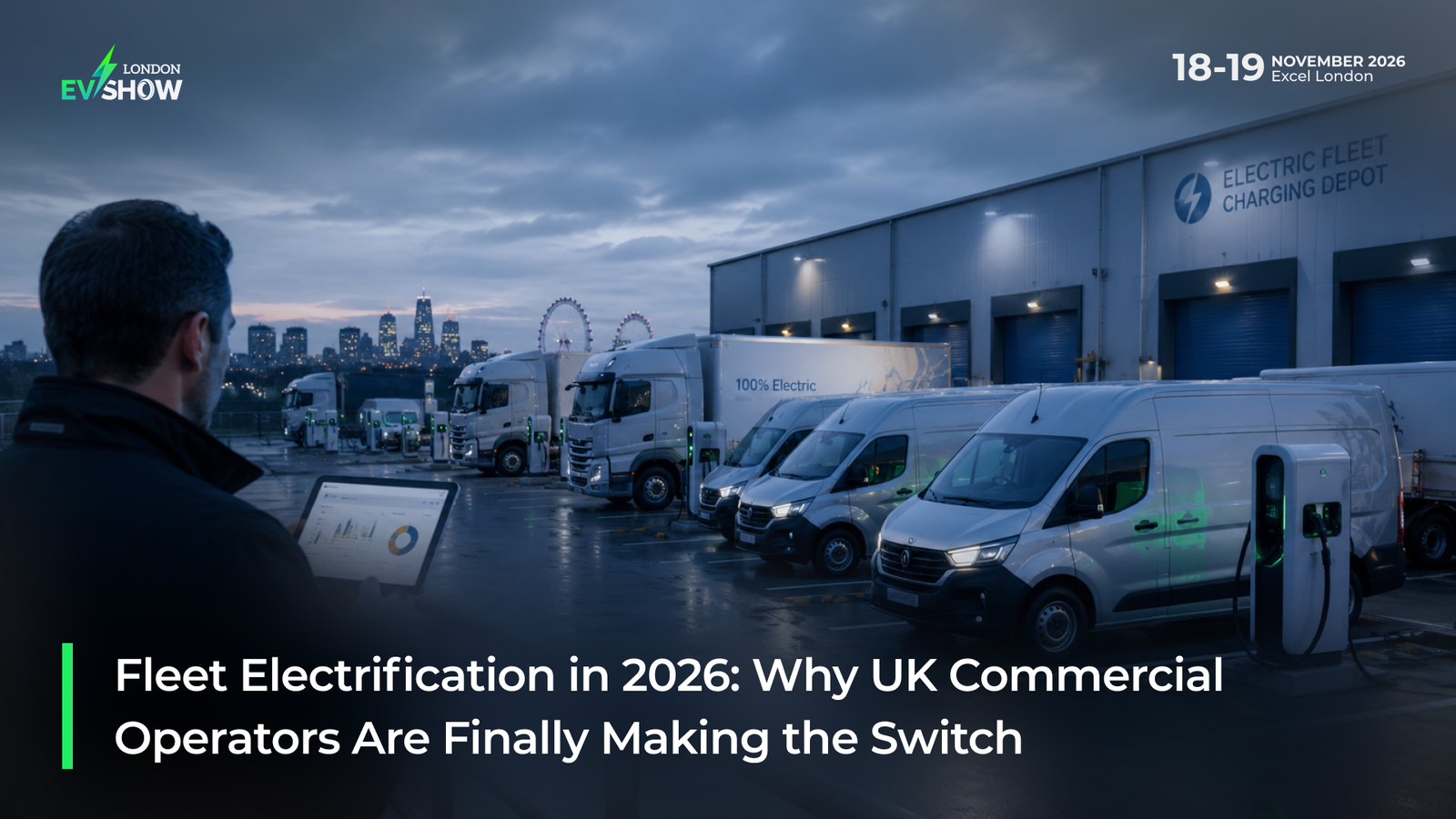
Fleet electrification has stopped being a "someday" conversation. UK fleets now account for over 60% of new EV registrations, and per EY analysis, more than 75% of new corporate car registrations in 2025 were electric — driven by cost, not just climate targets.
The Numbers
EY research found fleet electrification can cut operating costs by up to 64% for company cars and 38% for light commercial vehicles. Electric van registrations are forecast to grow ~50% in 2026 to roughly 45,000 units. But adoption is uneven: battery-electric vans made up just 10.4% of new UK LCV registrations in January 2026 (SMMT), well below the 24% ZEV mandate target for the year.
Why Vans Lag Cars
Company cars get a strong lever: Benefit-in-Kind tax on EVs sits at 3%, rising to just 5% by 2028, versus 20–37% for petrol/diesel. Vans have no equivalent incentive, so their case rests on total cost of ownership and charging infrastructure — both slower to prove out. Rising diesel prices in early 2026 have pushed some hesitant operators to revisit the electric case sooner than planned.
HGVs: The Hardest Segment
HGVs cause ~16% of UK transport emissions but remain the least electrified class. The government's £200m ZEHID programme is targeting 370 zero-emission HGVs across 14 charging hubs, with a further £1bn support package added in March 2026. Early real-world modelling shows electric HGVs can save over £100,000 per vehicle over its lifetime versus diesel — when route, payload, and grid connection line up.
The Infrastructure Bottleneck
The UK's public charging network now spans 119,000+ connectors, but for fleets building their own charging:
- Home charging: ~£1,000/install — cheapest option, best for drivers with off-street parking
- Depot charging (30+ vehicles): £80,000–£200,000 for a 10-bay install; 6–18 month lead times
- Public charging: viable as a supplement, not a primary strategy, at 60–80p/kWh
Grid connection delays of 18–36 months remain the real constraint on most timelines — not vehicle availability.
What Fleet Managers Should Do Now
1. Assign clear ownership — electrification stalls when it's a side project, not a dedicated role
2. Audit per-vehicle, not fleet-wide — highest-mileage vehicles make the strongest early business case
3. Don't force segments that aren't ready — match rollout to the mandate timeline, not an all-at-once switch
4. Start infrastructure planning early — depot and grid lead times, not vehicles, set your real timeline
Where This Is Heading?
70% of new van sales must be zero-emission from 2030, rising to 100% by 2035. Operators treating 2026 as planning time — auditing fleets, sorting infrastructure, building the internal case — will have options when those thresholds land. Those who wait face a shorter runway and a tighter market.
Frequently Asked Questions about Fleet & Commercial EV Electrification
Is fleet electrification actually cheaper than running diesel in 2026?
For many use cases, yes — EY research puts potential operating cost savings at up to 64% for company cars and up to 38% for light commercial vehicles, though the gap narrows for fleets relying heavily on public charging rather than depot or home charging.
What's the biggest barrier to fleet electrification right now?
Infrastructure lead times are the most cited blocker — depot installations can take 6–18 months, and grid connections can take 18–36 months, often longer than the vehicle procurement itself.
Why are electric vans behind electric cars in adoption?
Vans don't benefit from the same Benefit-in-Kind tax incentive that has driven corporate car electrification, so their business case depends more on total cost of ownership and charging infrastructure readiness.
Are electric HGVs viable yet?
They're viable in specific use cases. Government-backed demonstration projects have shown electric HGVs can save over £100,000 across a vehicle's lifetime versus diesel — but only where route, payload, and grid connection line up favourably.
What's the UK's ZEV mandate target for vans in 2026?
The mandate targets 24% battery-electric share of new van sales in 2026; actual registrations were running at around 10.4% as of January 2026, indicating the market has a gap to close.
Want to see the vehicles, charging systems, and fleet management platforms driving this transition up close? The London EV Show brings fleet operators, charging infrastructure providers, and OEMs together on one show floor at Excel London this November