10 Innovation Startups That Match Ras Al Khaimah’s Future Growth Themes
Ras Al Khaimah is entering a new phase of economic development, one defined by investment diversification, infrastructure expansion, and stronger cross-sector collaboration.

First published onRAKIS ↗
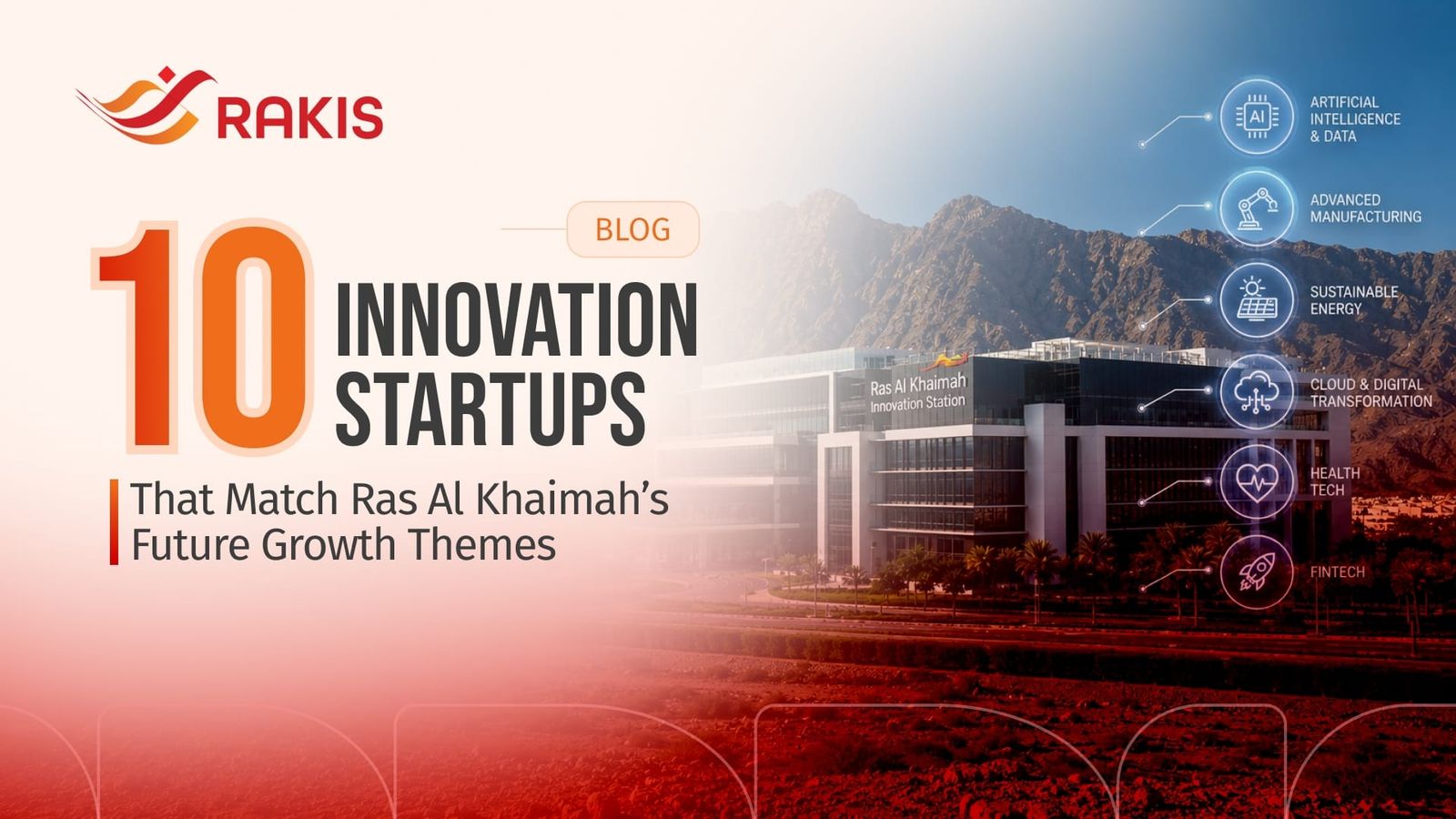
Ras Al Khaimah is entering a new phase of economic development, one defined by investment diversification, infrastructure expansion, and stronger cross-sector collaboration. As the emirate strengthens its position across real estate, tourism, logistics, manufacturing, and financial services, innovation will play a central role in shaping how that growth is delivered .
For investors, developers, government stakeholders, and business leaders, the question is no longer whether innovation matters. It is which technologies and startup models are best aligned with Ras Al Khaimah’s future growth themes. In that context, the emirate is not just responding to global trends. It is creating the conditions for them to scale, with a growing ecosystem designed to support future-ready industries.
This is especially relevant as Ras Al Khaimah expands its business proposition through platforms such as RAKIS, which connects stakeholders across real estate, infrastructure, tourism, investment, and finance . The startups that fit this environment are not simply those with the latest software. They are the ones that solve practical problems, improve efficiency, strengthen decision-making, and support long-term value creation.
1. PropTech platforms for smarter real estate
Real estate remains one of Ras Al Khaimah’s priority sectors, and PropTech startups are changing how projects are marketed, managed, financed, and experienced . From digital property search to tenant management and smart valuation tools, PropTech companies help developers and investors make faster, more informed decisions.
In a market where infrastructure and urban expansion are creating new development opportunities, platforms that improve transparency and simplify transactions are especially relevant. They support better investor engagement, reduce friction in the sales process, and help real estate businesses operate with more data and less guesswork.
2. Construction technology startups
Construction is another sector where innovation can create immediate commercial value. Startups in this space are building tools for project planning, site monitoring, digital collaboration, and cost control. They matter in markets where delivery speed, quality assurance, and workforce efficiency are critical to successful execution.
For Ras Al Khaimah, where real estate and infrastructure growth are central to the wider economic story, construction tech is not a niche category. It is a practical enabler of scale. Startups that support contractors, EPC firms, and project managers can help reduce delays, improve visibility, and enhance coordination across complex build environments.
3. Smart city solution providers
As cities become more connected, the demand for smart infrastructure is rising. Startups that work in IoT, urban data platforms, mobility systems, and intelligent asset management can help governments and developers create more responsive, efficient urban environments.
This aligns closely with Ras Al Khaimah’s broader growth narrative, especially as the emirate develops new districts, tourism assets, and infrastructure pipelines. Smart city startups are particularly relevant where public-private collaboration is expanding and where long-term planning requires better data, stronger integration, and more resilient systems .
4. Logistics and supply chain innovators
Logistics is a strategic growth sector for Ras Al Khaimah, particularly as trade, industrial services, and warehousing continue to evolve . Startups in this category are building tools for route optimization, inventory visibility, freight coordination, and automated supply chain planning.
These solutions matter because modern logistics is no longer only about movement. It is about efficiency, visibility, and adaptability. Startups that improve operational intelligence can support regional trade flows, strengthen industrial competitiveness, and help businesses scale across the UAE and GCC.
5. Tourism technology startups
Tourism is a major pillar of Ras Al Khaimah’s economic expansion, with visitor growth and destination development playing an increasingly important role in diversification . Startups in tourism tech can improve booking systems, visitor experience platforms, digital concierge services, and destination marketing tools.
For a market investing in luxury hospitality, adventure tourism, and eco-friendly experiences, these startups are especially valuable. They help operators attract the right audience, personalize engagement, and improve the quality of service across the visitor journey. In destination-led economies, technology shapes not just operations but perception.
6. Healthtech and digital health startups
Healthtech may not be the most obvious link to RAKIS, but it fits the emirate’s future-ready innovation story, especially in relation to investment ecosystems like Innovation City. Startups in digital health, telemedicine, diagnostics, and health data platforms are becoming increasingly important in broader economic planning.
These companies support workforce wellbeing, improve access to care, and create opportunities for institutional collaboration. In a future-focused emirate, healthtech is part of the wider infrastructure of competitiveness. It contributes to livability, talent attraction, and long-term economic resilience.
7. Web3 and digital asset startups
Ras Al Khaimah’s evolving technology ecosystem is also becoming more open to emerging digital models, including Web3 and digital assets. Startups in tokenization, blockchain infrastructure, digital identity, and decentralized finance are helping shape a new layer of economic activity.
These companies matter because they are not only building products. They are building the financial and digital rails for future commerce. In markets seeking to attract capital, talent, and institutional innovation, clarity around digital asset ecosystems can be a strong differentiator.
8. Robotics and automation startups
Robotics is increasingly relevant across logistics, inspection, maintenance, manufacturing, and urban operations. Startups in this area can help businesses improve precision, reduce costs, and automate repetitive or high-risk tasks.
For Ras Al Khaimah, where industrial growth and operational efficiency are important priorities, robotics offers a practical route to productivity. These solutions also support the transition toward more advanced industrial systems, especially in sectors where scale and reliability are essential.
9. Green economy and sustainability startups
Sustainability is no longer a side theme. It is becoming central to investment strategy, construction planning, and long-term economic positioning . Startups in renewable energy, energy storage, waste management, clean materials, and ESG technology are increasingly relevant to growth markets.
Ras Al Khaimah’s future will likely depend not just on how fast it grows, but how responsibly it grows. Sustainability startups help businesses and governments reduce environmental impact while improving performance. They are essential to the next generation of development-led economies.
10. Fintech and investment enablement startups
Financial innovation is a major enabler of growth, especially in markets aiming to attract global capital and support cross-border investment . Fintech startups are building solutions for payments, compliance, investment access, digital banking, and wealth management.
For an investment platform like RAKIS, fintech is highly relevant because it supports the flow of capital into new projects, businesses, and partnerships. These startups make it easier for institutions, investors, and enterprises to participate in growth markets with speed and confidence.
Why these startups matter
What connects all of these categories is not just innovation. It is relevance. The startups most aligned with Ras Al Khaimah’s future are the ones that support real economic outcomes: faster development, smarter infrastructure, stronger investment flows, and more efficient business ecosystems.
As Ras Al Khaimah continues to expand its investment story, the opportunity lies in linking vision with execution. That means backing the startups and technologies that can help shape the emirate’s next chapter across real estate, tourism, logistics, finance, and future industries.
RAKIS 2026 is designed for exactly this kind of dialogue . It is where growth sectors meet capital, and where innovation becomes part of the region’s broader economic strategy.