Ras Al Khaimah's Tourism Transformation: How Record Visitor Growth Is Reshaping the Emirate's Investment Future
The emirate's tourism sector has entered a new phase, with record visitor arrivals, strengthening domestic demand, and a rapidly expanding hospitality pipeline reinforcing its position as a destination that is moving beyond momentum and into maturity.
First published onRAKIS ↗
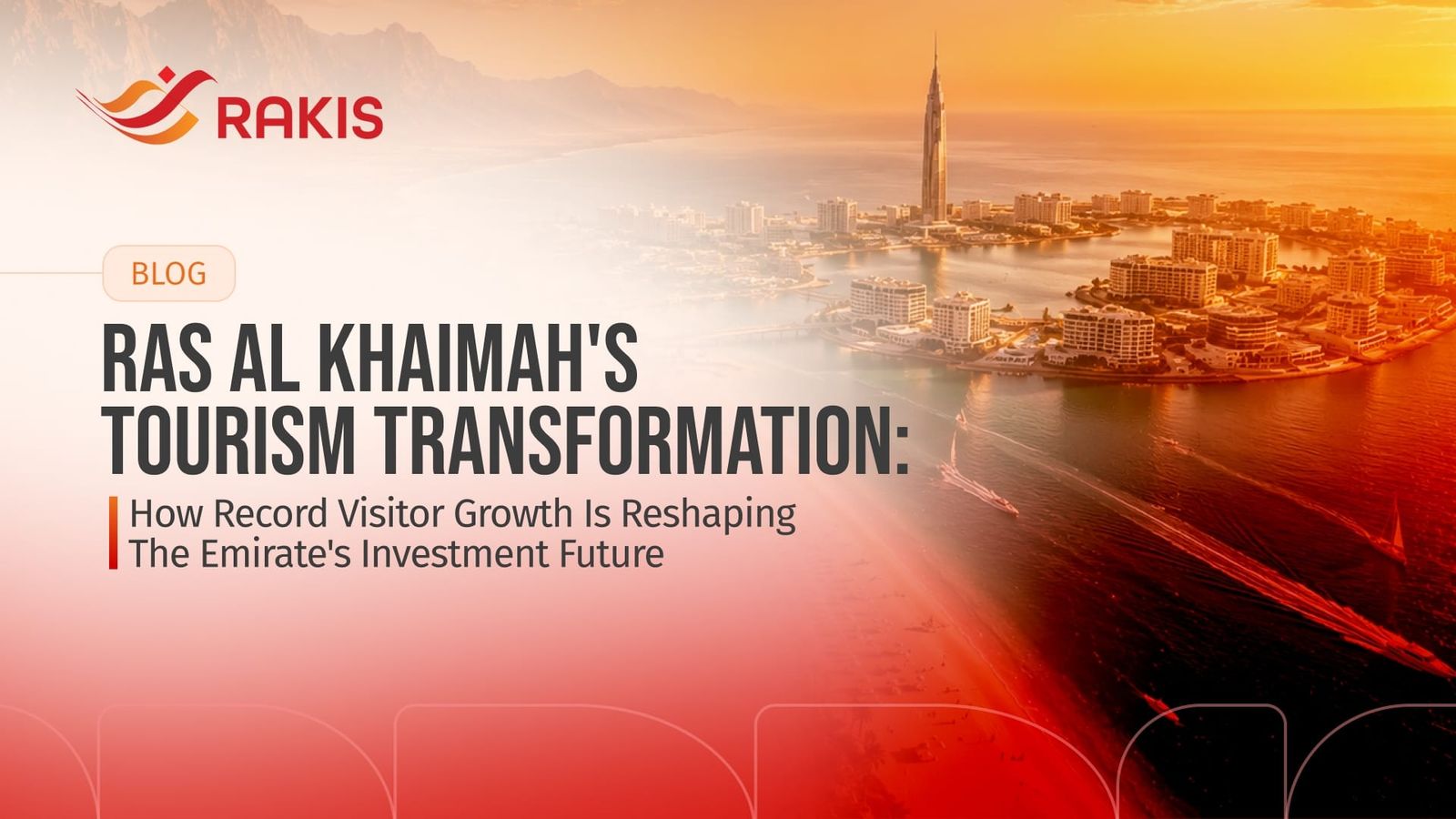
More Than 670,000 Visitors in Just Six Months
That's more than a tourism milestone, it's a clear signal that Ras Al Khaimah is emerging as one of the UAE's fastest-growing destinations for investment, hospitality, and long-term economic growth.
The emirate's tourism sector has entered a new phase, with record visitor arrivals, strengthening domestic demand, and a rapidly expanding hospitality pipeline reinforcing its position as a destination that is moving beyond momentum and into maturity.
During the first half of 2026, Ras Al Khaimah welcomed more than 670,000 visitors, recording its strongest first-half tourism performance to date. More importantly, these results demonstrate that tourism is becoming a catalyst for wider economic transformation, creating opportunities across hospitality, real estate, infrastructure, retail, and business investment.
As the emirate continues progressing towards its long-term tourism ambitions, the story is no longer just about attracting more visitors. It is about building a globally competitive destination that supports sustainable economic growth and attracts long-term capital.
Record-Breaking Performance Sets a New Benchmark
The latest tourism figures reflect far more than increasing visitor numbers.
Despite regional geopolitical uncertainty affecting travel patterns across parts of the Middle East, Ras Al Khaimah continued to outperform expectations.
Domestic visitor arrivals increased by 47% year-on-year, while May 2026 became the strongest month ever recorded for visitor arrivals, highlighting the growing strength of regional and domestic tourism demand.
The commercial performance was equally impressive.
During the second quarter alone, the emirate generated:
- 224,000 room nights
- AED 104.4 million in hotel revenue
- 127,817 incremental visitors
These figures demonstrate that destination marketing, hospitality investment, and tourism development are translating into measurable economic returns.
For an emirate still expanding its global profile, this level of performance reflects a tourism strategy that is becoming increasingly resilient, diversified, and commercially successful.
A Destination Designed for Diverse Experiences
One of Ras Al Khaimah's greatest competitive strengths lies in the diversity of experiences it offers.
Within a relatively compact geography, visitors can explore pristine beaches, mountain adventures, heritage attractions, luxury resorts, wellness experiences, and family-friendly leisure destinations.
Rather than competing directly with neighbouring destinations, Ras Al Khaimah has successfully developed its own identity—one built around authentic experiences, natural landscapes, luxury hospitality, and sustainable tourism.
This diversified offering has enabled the emirate to appeal to multiple traveller segments, including families, couples, staycation visitors, luxury travellers, and international holidaymakers.
Equally important, it reduces dependence on any single source market or visitor category, creating a stronger foundation for year-round tourism growth and long-term resilience.
Luxury Hospitality Is Accelerating Growth
Luxury tourism has become one of the defining pillars of Ras Al Khaimah's next growth phase.
The emirate continues to attract world-class hospitality brands, integrated resorts, and branded residential developments that are elevating its international profile.
Among the most significant developments are Wynn Al Marjan Island and Marjan Beach, both expected to transform Ras Al Khaimah's tourism and real estate landscape over the coming years.
These projects are supported by an ambitious long-term vision.
Ras Al Khaimah aims to welcome 3.5 million visitors annually by 2030, while more than 70% of its future hotel inventory is expected to be five-star.
This reflects a deliberate strategy focused not only on attracting higher visitor numbers but also on increasing visitor spending, extending average lengths of stay, and strengthening the emirate's global positioning as a premium tourism destination.
A luxury-led tourism model also creates broader economic value, generating demand across retail, hospitality, real estate, leisure, transport, and professional services.
Infrastructure Is Powering the Next Chapter
Tourism growth is being reinforced by significant investments in infrastructure and urban development.
Projects such as RAK Central, airport enhancements, and improved transport connectivity are making the emirate increasingly accessible while supporting future business and leisure travel.
At the same time, Ras Al Khaimah continues to invest in experience-led tourism through adventure attractions, destination campaigns, and world-class hospitality developments that encourage repeat visits and longer visitor stays.
These investments illustrate how tourism is becoming closely integrated with wider economic planning.
Rather than operating independently, tourism is now driving demand across construction, real estate, infrastructure, retail, mobility, and commercial development.
This interconnected approach is helping create a more diversified economy capable of sustaining long-term growth.
Why This Matters for Investors and Developers
For investors, developers, hospitality operators, and businesses, Ras Al Khaimah's tourism performance sends a clear message.
The emirate is evolving from a niche tourism destination into a mature investment market supported by strong fundamentals and long-term strategic planning.
Rising visitor arrivals, expanding hospitality infrastructure, luxury developments, and continued government investment together create an attractive environment for future capital deployment.
The significance of these record-breaking tourism figures extends well beyond the hospitality sector.
Growing visitor demand supports hotel performance, increases the appeal of branded residences, strengthens retail and leisure activity, and creates new opportunities across commercial real estate, infrastructure, logistics, and supporting industries.
For businesses evaluating opportunities within the UAE, tourism has become an important indicator of wider economic confidence and market maturity.
Looking Ahead to 2030
The next chapter of Ras Al Khaimah's tourism journey will be defined by execution.
Achieving the emirate's target of 3.5 million annual visitors by 2030 will require continued investment in hospitality, aviation connectivity, destination marketing, infrastructure, and visitor experiences.
However, the momentum established during the first half of 2026 provides strong evidence that Ras Al Khaimah is moving in the right direction.
As new hospitality projects open, international connectivity expands, and landmark developments reshape the emirate's landscape, tourism will continue acting as a catalyst for broader economic development.
The opportunities extend far beyond attracting visitors.
They include real estate investment, commercial development, infrastructure expansion, hospitality growth, and business collaboration across multiple sectors.
Conclusion
Ras Al Khaimah's tourism transformation represents far more than record visitor arrivals.
It reflects a long-term economic strategy centred on diversification, sustainable development, premium hospitality, and global competitiveness.
The first-half 2026 results demonstrate that Ras Al Khaimah is no longer preparing for growth, it is delivering it.
As tourism, infrastructure, hospitality, and investment continue to advance together, the emirate is strengthening its position as one of the Middle East's most compelling destinations for business, investment, and sustainable economic development.
For investors, developers, hospitality leaders, and policymakers, understanding this transformation is essential to recognising where the UAE's next wave of opportunity is taking shape.
Platforms such as RAK Investment and Business Summit (RAKIS) 2026 will continue bringing together the leaders, organisations, and decision-makers driving this remarkable journey, creating opportunities to connect, collaborate, and shape the future of Ras Al Khaimah.