
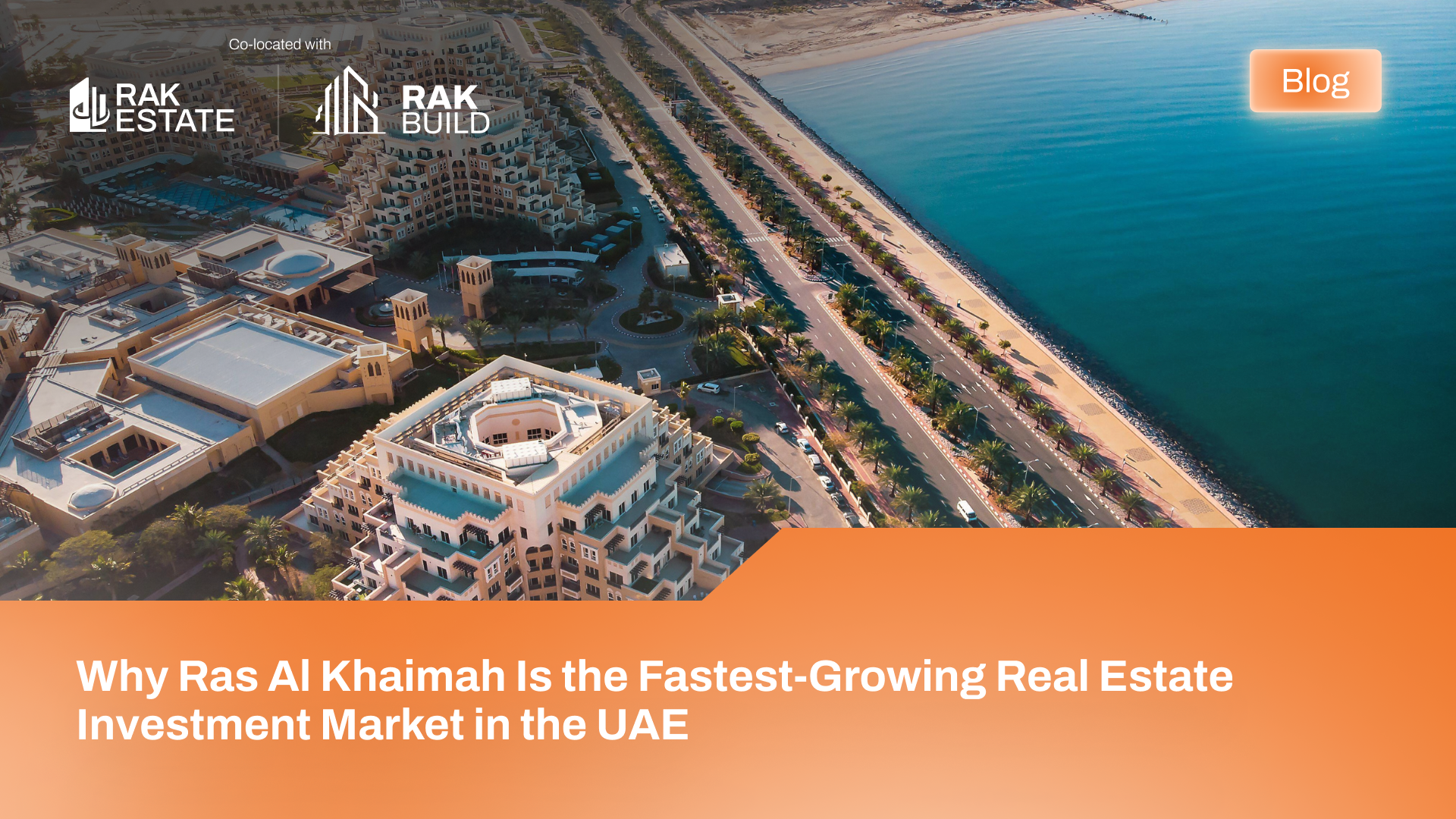
Ras Al Khaimah is no longer a “hidden gem” in UAE real estate; it is now the country’s most compelling growth story for investors. With residential values rising in double digits, a record off‑plan pipeline, and transformational tourism and infrastructure projects underway, the emirate is transitioning from an alternative market to a primary investment destination. For global and regional investors eyeing long‑term returns, Ras Al Khaimah now offers a rare combination of capital growth potential, yield resilience, and early‑cycle entry points.
A market outperforming on prices and volumes
Market data shows how quickly Ras Al Khaimah has moved up the UAE investment map. Freehold residential values rose by around 14.9% year‑on‑year in Q3 2025, with apartments leading at 15.5% annual growth and villas close behind at 13.8%. In parallel, transaction activity has reached multi‑year highs, supported by strong demand from both end‑users and investors. Off‑plan sales dominate, accounting for roughly 84–95% of transactions in 2025 and generating more than AED 8.2 billion across over 4,100 units in just the first nine months. This depth of off‑plan demand underlines investor confidence in the emirate’s future project pipeline.
Rental performance adds another layer to the story. Average gross yields on freehold residential assets stand at about 5.4%, with some communities achieving higher returns due to tourism‑led demand and limited ready stock. Research from CBRE highlights strong rental growth, with apartment rents increasing by around 20.8% and villas by 5.3% year‑on‑year in 2025. For investors, this alignment of capital appreciation and income growth is a powerful driver of total return.
Tourism and mega‑projects changing the fundamentals
Tourism is one of the strongest catalysts behind Ras Al Khaimah’s real estate momentum. Landmark developments on Al Marjan Island – including the emirate’s first major integrated resort featuring over 1,500 rooms, extensive entertainment, and premium hospitality facilities – are re‑shaping perceptions of the emirate on the global stage. The project is expected to attract millions of visitors annually, generate more than 4,000 new jobs, and create sustained demand for residential, hospitality, and retail assets in nearby communities including Al Marjan Island, Mina Al Arab, and Al Hamra Village.
Beyond Al Marjan Island, the wider masterplan, new branded hospitality offerings, and lifestyle‑led beachfront projects are repositioning Ras Al Khaimah as a premium tourism and second‑home destination. Analysts expect residential stock to double by 2030, with more than 11,000 units scheduled for completion and a requirement for around 45,000 units over the next five to seven years to meet projected population growth from 400,000 to approximately 650,000. This structural demand story provides strong visibility for developers and long‑term investors.
Branded residences and lifestyle communities on the rise
One of the clearest indicators of RAK’s maturity as an investment market is the rapid growth of branded residences. CBRE notes that luxury names such as Ritz‑Carlton, Aston Martin, and other international brands are entering the emirate, with branded units expected to comprise about 25% of upcoming freehold supply to 2030 around 4,800 units. Across 2025–2030, a further 19,300 residential units are projected for completion, underscoring the scale of planned development. These projects typically command pricing and rental premiums, attracting high‑net‑worth buyers and global investors seeking both lifestyle and investment value.
Demand is particularly concentrated in established and emerging hubs: Al Marjan Island, Al Hamra Village, Mina Al Arab, and the new RAK Central district. These areas blend waterfront living, retail, hospitality, and commercial space qualities that resonate strongly with international buyers familiar with integrated communities in Dubai and Abu Dhabi, but at relatively more accessible price points.
Infrastructure, economic zones, and job creation
Ras Al Khaimah’s appeal is not only about beachfront living. The emirate is investing heavily in infrastructure and industrial capacity, creating a broader economic base to support long‑term real estate performance. The Ras Al Khaimah Economic Zone (RAKEZ) has become a core engine of growth, attracting manufacturing, logistics, and advanced industrial tenants, and acting as a strategic backbone behind many of the emirate’s most ambitious developments. New initiatives such as the Ras Al Khaimah Smart Manufacturing Industrial Park in Al Hamra, covering over 300,000 square metres, further strengthen the industrial ecosystem and employment base.
Transport and urban infrastructure are being upgraded in parallel. Major road enhancements and integrated mixed‑use projects like RAK Central, the emirate’s future civic and commercial heart are designed to link industrial zones with tourism and residential clusters, improving overall connectivity and liveability. This combination of jobs, infrastructure, and lifestyle is central to Ras Al Khaimah’s positioning as a place to live, work, and invest, rather than a purely speculative holiday‑home market.
Early‑cycle valuations and narrowing entry window
Compared with more mature UAE hubs, Ras Al Khaimah still offers relatively attractive entry prices, particularly given its current growth trajectory. Analysts highlight that capital values, while rising quickly, remain below equivalent waterfront and branded‑residence benchmarks in Dubai, creating a perceived “value gap” for medium‑ to long‑term investors. Research cited by market commentators suggests that RAK’s property prices could rise by around 20% in 2026 alone, driven by strong off‑plan demand, limited prime coastal supply, and the impact of mega‑projects nearing completion.
Industry experts argue that 2026–2027 may represent a critical window for investors to enter before pricing fully reflects the emirate’s new positioning. One analysis notes that “the window to enter at relatively early valuations is narrowing, making 2026 a critical period to participate in RAK’s long‑term growth story.” With off‑plan registrations already comprising the overwhelming majority of transactions and re‑sale activity in off‑plan units on the rise, early movers are increasingly being rewarded.
A differentiated, resilience‑oriented investment story
What sets Ras Al Khaimah apart from other high‑growth markets is the balance between speculative upside and real‑economy fundamentals. Tourism‑led projects such as Wynn Al Marjan Island, large‑scale hospitality and entertainment investments, and a growing pipeline of branded residences underpin the premium segment. At the same time, RAKEZ’s role in advanced manufacturing, logistics, and industrial diversification creates a diversified demand base that supports housing, commercial, and community development across income brackets.
The emirate’s long‑term masterplan explicitly focuses on sustainable, mixed‑use growth that integrates business, tourism, and community living. For investors, that means exposure to a market where infrastructure, regulation, and strategic planning are working in tandem with private‑sector development, rather than reacting to it.
For attendees and partners of RAK ESTATE 2026, this context is critical. The event sits at the intersection of these trends connecting developers, investors, intermediaries, and government stakeholders who are actively reshaping Ras Al Khaimah’s skyline and investment landscape. Whether the focus is off‑plan residential, branded resorts, income‑producing assets, or long‑term land and development plays, Ras Al Khaimah is increasingly where the UAE’s next wave of real estate growth is being written.