UK’s First MS Patient Receives CAR T Cell Therapy in Groundbreaking UCL Trial
First published onBio Technology Show ↗
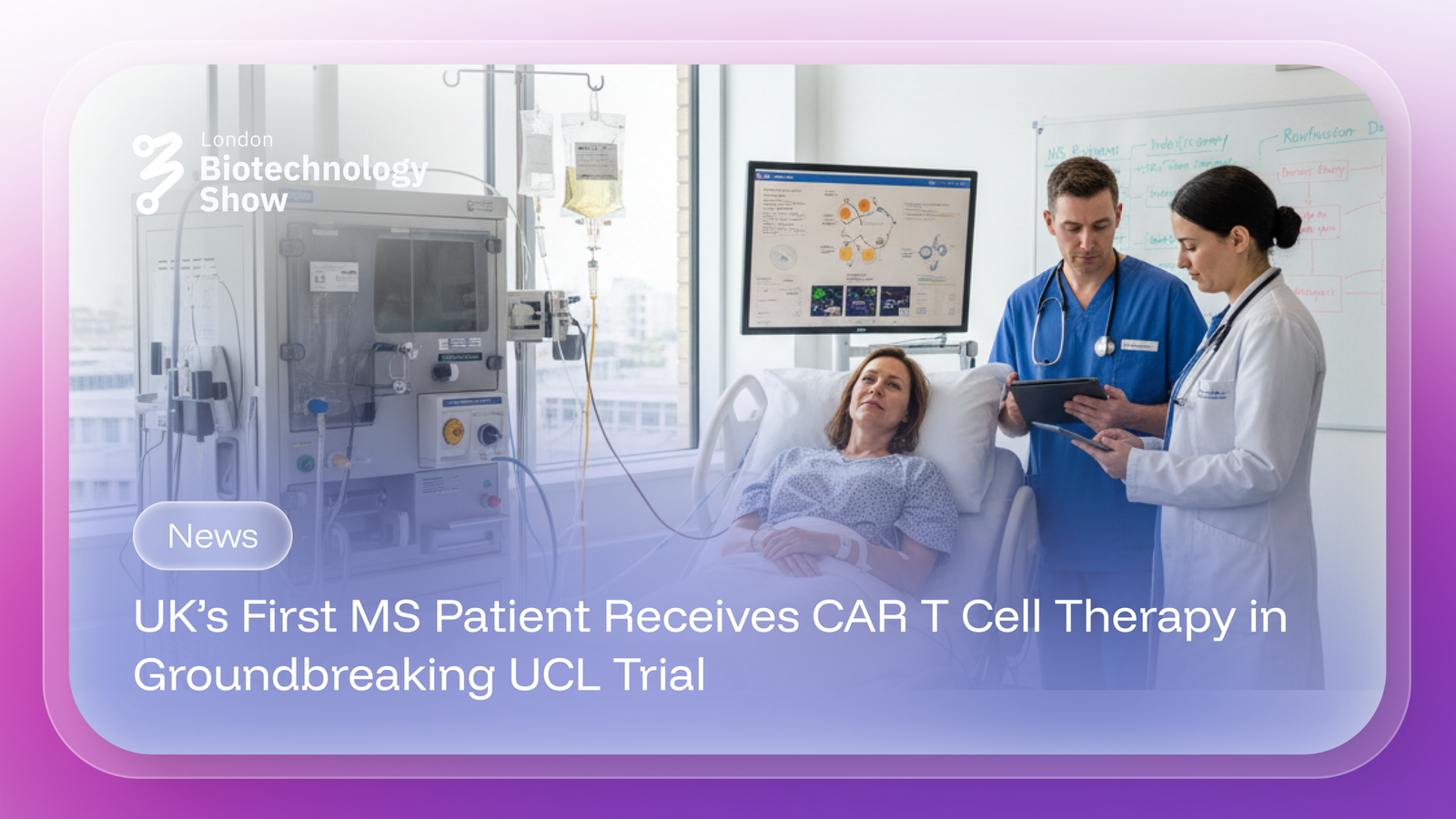
London, 24 Oct 2025: A patient with multiple sclerosis (MS) in the UK has become the first to receive CAR T cell therapy, an innovative treatment developed by researchers at University College London (UCL), as part of a clinical trial investigating whether this personalised approach can slow or even stop disease progression.
MS is a chronic condition that affects the brain and spinal cord by damaging the myelin sheath that protects nerve fibers. The resulting nerve damage leads to symptoms such as blurred vision, muscle weakness, mobility issues, and cognitive problems. While current treatments can help manage symptoms and slow progression, none can completely prevent relapses or halt long-term disability.
Researchers are now testing whether CAR T cell therapy (obe-cel, or obecabtagene autoleucel), a treatment already proven effective against certain blood cancers, can also be applied to autoimmune diseases such as lupus and MS. The therapy works by “resetting” the immune system, targeting and eliminating B cells believed to drive the autoimmune attack, potentially offering lasting remission.
In the University’s publication, Dr. Claire Roddie of the UCL Cancer Institute and UCLH, a key figure in developing CAR T treatments, said: “It is fantastic to be involved in the development of obe-cel for patients with MS and this Phase I clinical study will help us understand how safe and effective obe-cel is for MS. Our ultimate goal is to achieve long periods of disease remission with a single, one-time CAR T treatment.”
The clinical trial, named AUTO1-MS1, is led by Dr. Wallace Brownlee, a consultant neurologist at UCLH and clinical lead for MS at the National Hospital for Neurology and Neurosurgery.
More than 150,000 people in the UK live with MS, with nearly 7,100 new diagnoses each year.
Dr. Frederick Vonberg from UCL’s Department of Neuromuscular Diseases and UCLH added:
“This trial is open to UK patients diagnosed with relapsing or progressive forms of MS who are not responding well to the best medications already available and whose disability is worsening. We encourage patients aged between 18 and 60 years to speak to their neurologist and explore whether they might be eligible for a referral to this trial. The trial aims to recruit up to 18 patients globally by early 2027.”
The obe-cel CAR T therapy being used was originally developed at the UCL Cancer Institute under the leadership of Dr. Martin Pule. The second-generation treatment, licensed to Autolus, has already shown reduced toxicity and longer persistence in blood cancer patients. It has received regulatory approval from both the US FDA and UK MHRA for acute lymphoblastic leukemia, though it remains experimental for autoimmune conditions like MS.
The trial marks a major step forward in exploring how cell-based therapies could transform the treatment of autoimmune diseases. If successful, this pioneering study could pave the way for a new generation of personalised therapies capable of halting or even reversing the progression of multiple sclerosis.