UK Electric Vehicle Market Hits New Milestone with 43,500+ Cars Sold in July
First published onLondon EV Show ↗
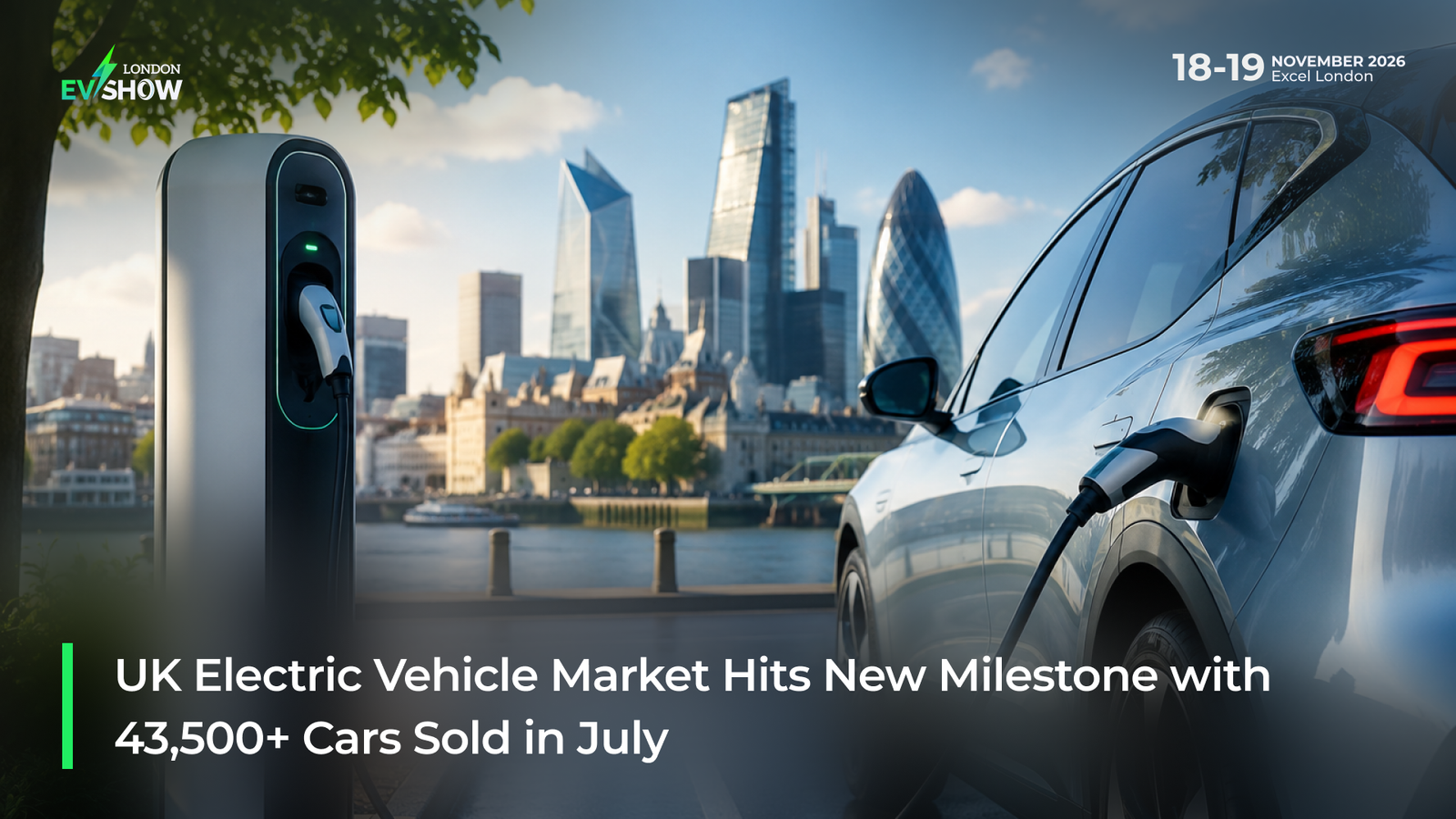
London, UK — August 2026: The UK’s electric vehicle market is continuing to gain momentum, with battery electric vehicles (BEVs) accounting for 27.4% of all new car registrations in July 2026, according to the latest data from New AutoMotive.
A total of 43,547 battery electric cars were registered during the month, representing a 49% increase compared with July 2025. The figures mark the second consecutive month in which BEV sales have outpaced the trajectory set by the UK’s Zero Emission Vehicle (ZEV) Mandate.
The surge comes as the UK’s wider new-car market also recorded strong growth. SMMT data shows that 156,571 new cars were registered in July, an 11.7% increase year-on-year and the strongest July performance since 2019. BEVs reached a record 27.5% market share in the SMMT figures.
The latest figures highlight how quickly electric vehicles are becoming an increasingly important part of the UK's new-car market.
While BEV adoption continues to grow, traditional petrol and diesel vehicles are losing ground. The expansion of available electric models, manufacturer incentives and discounts, and changing consumer economics are among the factors contributing to stronger EV demand.
New AutoMotive's figures also indicate that the UK's battery electric market share has reached 25.3% year-to-date, putting the market ahead of the effective 2026 ZEV Mandate trajectory.
However, the industry still faces a significant gap between current adoption and the government's headline targets. The 2026 ZEV Mandate target is 33%, while industry forecasts suggest BEVs could account for around 27.4% of new car registrations across the full year.
Competition Across the EV Market Intensifies
The growth in registrations is also reshaping competition among automotive manufacturers.
July saw Volkswagen, BYD and Kia emerge as the leading BEV performers, while Kia recorded a particularly strong month, with BEVs accounting for around 41% of its sales. Renault also reported that electric vehicles represented more than half of its July sales.
The changing competitive landscape demonstrates the increasingly diverse range of electric vehicles available to UK consumers, with established automotive brands competing alongside rapidly expanding EV manufacturers.
Charging Infrastructure Remains Critical
Despite the positive sales figures, vehicle adoption is only one part of the UK's transition to electric mobility.
As more drivers move to BEVs, the availability, reliability and accessibility of charging infrastructure will become increasingly important. Public charging networks, workplace charging, home charging and rapid charging infrastructure will all play a role in supporting the next stage of EV adoption.
The industry's challenge is therefore shifting from simply encouraging consumers to consider electric vehicles to building the ecosystem required to support millions of electric vehicles on UK roads.
The Road Ahead for UK Electric Mobility
July's figures provide another strong indication that electric mobility is becoming an integral part of the UK automotive market. But sustaining this momentum will require continued investment across the entire EV ecosystem, from vehicle technology and battery innovation to charging infrastructure, energy management, fleet electrification and consumer services.
With the UK targeting further increases in zero-emission vehicle sales over the coming years, collaboration across these sectors will be essential to turning rising EV registrations into a fully connected and scalable electric mobility ecosystem.