Navigating Sustainability in Fleet Management: Insights from Hashim Alfatayerji at the Global EV and Mobility Technology Forum 2024
First published onGemtech Forum ↗
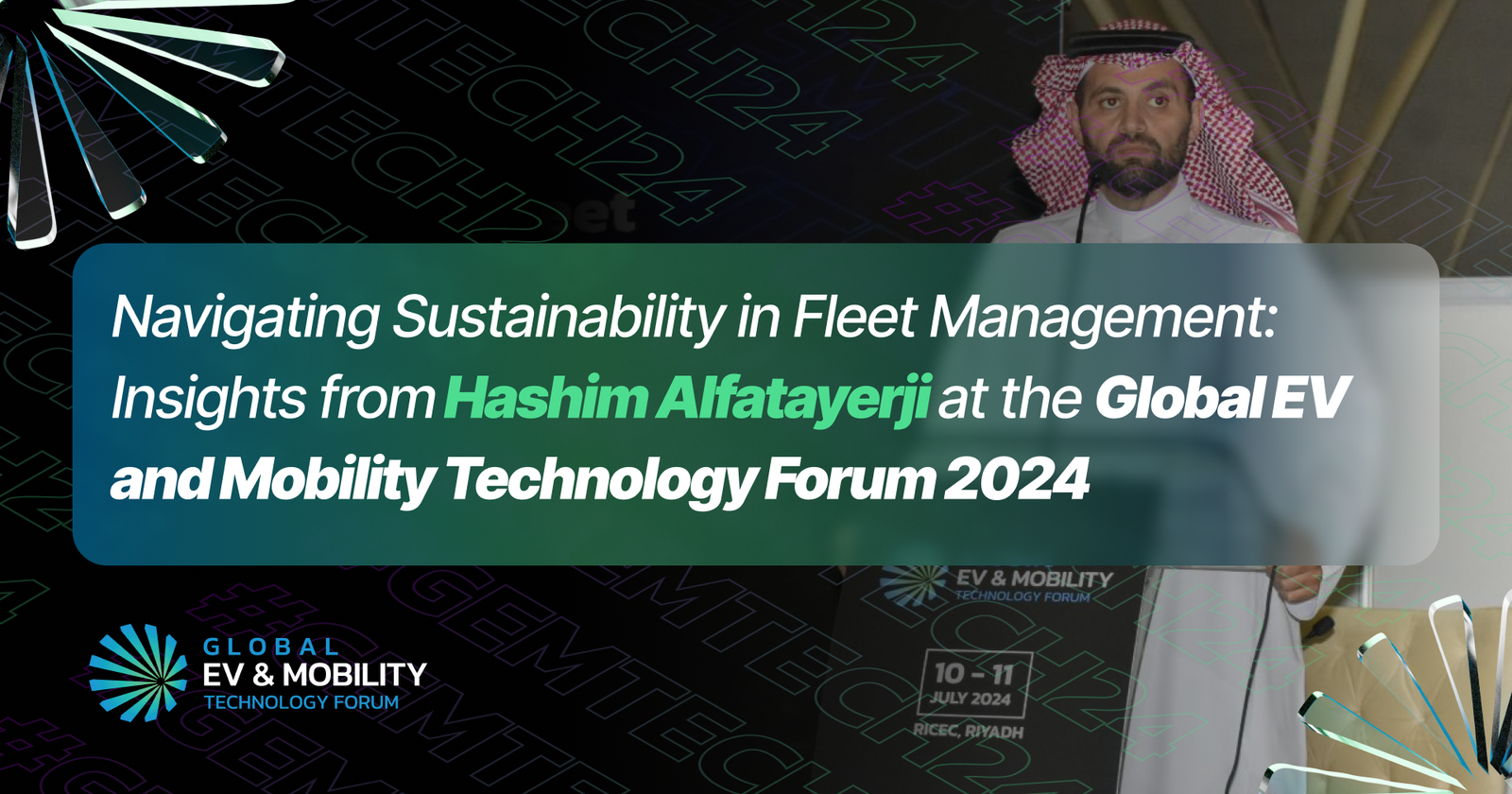
At the recently held Global EV and Mobility Technology Forum at RICEC Riyadh, Hashim Alfatayerji, the Operations and Commercial Director at SIXT Saudi Arabia, delivered an insightful presentation on the integration of sustainability in fleet management. Hashim’s speech highlighted the critical role of fleet management in adapting to a rapidly evolving regulatory and environmental landscape, emphasising strategies to enhance sustainability while optimising operations.
Hashim commenced his talk with how businesses can evolve their fleet management practices to align with new green initiatives and regulatory standards. As part of Alturki Holding, SIXT Saudi Arabia operates with a top-down approach where sustainability is a core focus that is evident in their practices and policies.
Embracing Electric and Hybrid Vehicles
One of the key takeaways from Hashim’s speech was the emphasis on transitioning to EVs and hybrid vehicles. SIXT Saudi Arabia stands out as a leader in this field, boasting the largest fleet of electric vehicles in the Kingdom with over 200 units from various brands such as Tesla and Rivian. This move is part of a broader strategy to reduce reliance on traditional combustion engines and cut fuel consumption, which is increasingly becoming costly and regulated.
Hashim advised companies to reconsider their vehicle replacement cycles. Rather than adhering to the common practice of replacing vehicles every three years, he recommended extending the lifespan of vehicles to five to seven years. This approach makes economic sense & also aligns with sustainability goals by reducing the frequency of vehicle disposal and production.
He also underscored the benefits of shared mobility solutions. Hashim cited successful implementations at Neom and Diriyah, where shared mobility is used to efficiently manage transportation needs for large employee bases. By allowing employees to book and use vehicles as needed rather than maintaining a large fleet, these companies are reducing their environmental footprint and operational costs.
Optimising Fuel Consumption and Telematics
Addressing fuel efficiency, Hashim highlighted the importance of leveraging advanced fuel management solutions. Many companies are not fully utilising the capabilities of available fuel apps and solutions. By providing detailed reports and consulting services, SIXT Saudi Arabia helps businesses optimise fuel consumption and reduce waste.
Telematics was another critical topic. Hashim explained that sophisticated telematics systems can track various metrics like load weights, waiting times, and vehicle usage. This data is crucial for minimising environmental impact and operational costs. Effective use of telematics allows for better fleet management and preparation for regulatory changes.
Focus on Maintenance and Driver Training
Maintaining vehicles in good condition is essential for sustainable fleet management. Hashim emphasised that companies often overlook the cumulative impact of maintenance costs. Investing in reliable suppliers and focusing on vehicle upkeep can prevent costly breakdowns and extend the lifespan of the fleet.
Driver training emerged as a vital component of fleet sustainability. Hashim stressed that consistent training can reduce accidents by up to 25%, which is significant given that a substantial portion of vehicles in Saudi Arabia are company-operated. Enhanced training programs along with real time tracking and policies for driving hours not only improve safety but also contribute to a more environment friendly driving culture.
Engaging Stakeholders
Finally, Hashim advised fleet managers to engage with various stakeholders, including top management, suppliers, and customers. By demonstrating the impact of sustainable practices through detailed reports and stakeholder engagement, fleet managers can drive better decision-making and align with green initiatives and new regulations.
In conclusion, Hashim’s presentation provided a comprehensive overview of how fleet management can evolve to meet sustainability goals. By adopting electric and hybrid vehicles, optimising shared mobility, improving fuel efficiency, leveraging telematics, focusing on maintenance, and investing in driver training, companies can significantly reduce their environmental impact while enhancing operational efficiency. The insights shared at the forum serve as a valuable guide for businesses aiming to navigate the future of fleet management in a more sustainable direction.