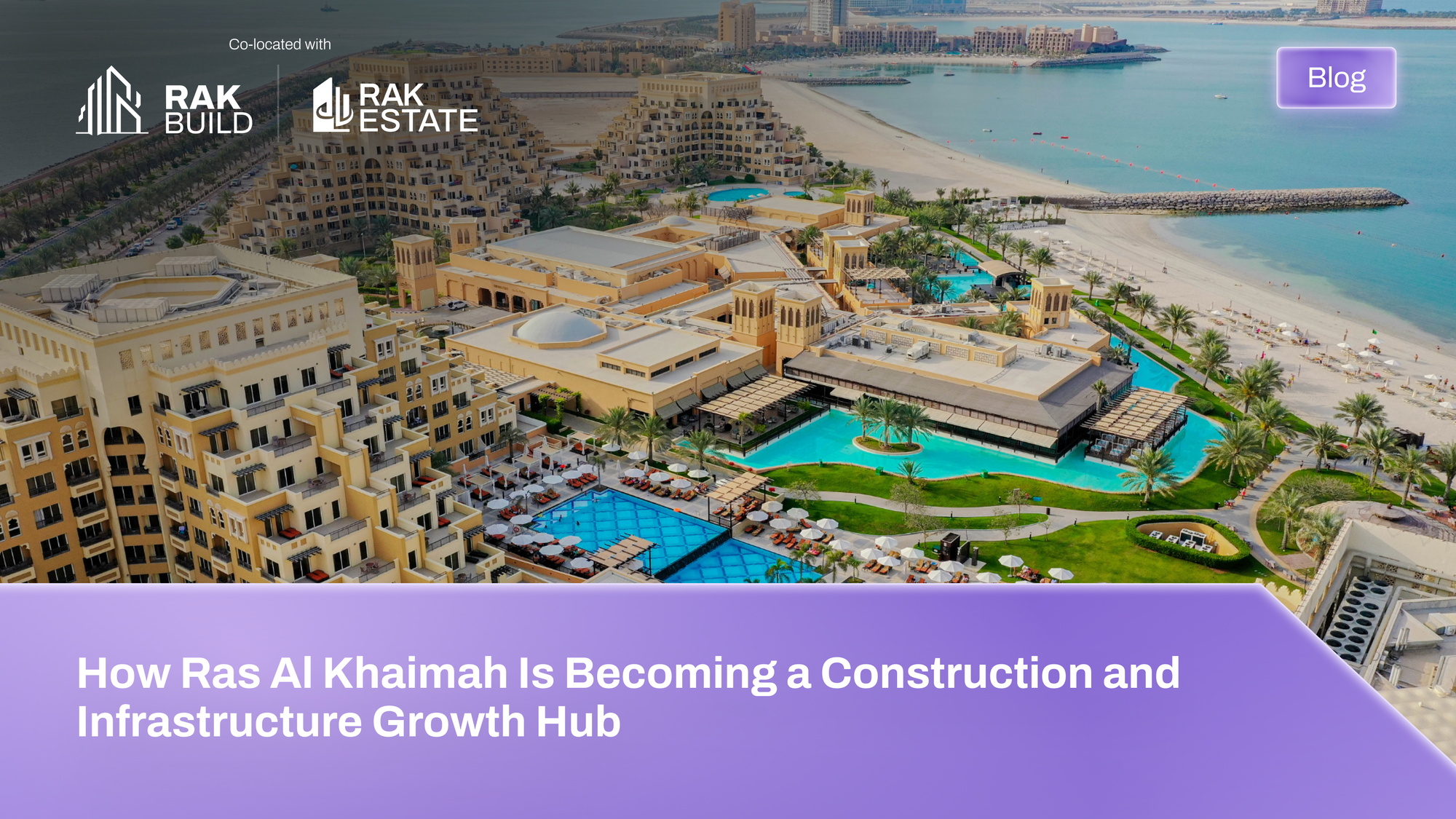
Ras Al Khaimah (RAK), the northernmost emirate of the UAE, is rapidly establishing itself as one of the region’s most dynamic construction and infrastructure hubs. With strategic investments in industrial zones, transport networks, and mixed‑use developments, RAK is leveraging its natural advantages: competitive land costs, business‑friendly policies, and proximity to key trade routes to attract developers, manufacturers, and investors from across the GCC and beyond. This transformation is not just incremental; it reflects a deliberate vision to diversify the emirate’s economy, create jobs, and position RAK as a logistics and manufacturing powerhouse by 2030.
At the heart of this growth is the Ras Al Khaimah Economic Zone (RAKEZ), which has become a magnet for construction‑related industries. RAKEZ hosts major players including Fala Group, Peikko Group, Sobha Modular Industries, and Hira Industries, spanning advanced manufacturing, metal fabrication, HVAC systems, modular construction, and engineered materials. Recent milestones, such as Sobha Modular’s 250,000 sq m manufacturing plant at Al Hamra and THi’s groundbreaking for the 300,000 sq m Ras Al Khaimah Smart Manufacturing Industrial Park, underscore the emirate’s appeal to high‑value industrial enterprises. These projects are designed to provide scalable, high‑specification facilities, supporting RAK’s push into next‑generation manufacturing and export‑led growth.
Infrastructure development is accelerating to match this industrial momentum. A flagship project is the expansion of Sheikh Mohammed bin Salem Road (E11), a critical coastal highway linking Al Hamra Roundabout to Sheikh Mohammed bin Zayed Road (E311). Phase one will widen the 11.5 km route from two to four dual lanes, adding service roads, upgraded junctions, intelligent transport systems (ITS), and enhanced drainage and utility networks all completed within 24 months. Phase two introduces four bridges, underpasses, and commercial parking at high‑traffic nodes like Dolphin Junction and Mina Al Arab, expected to boost capacity, cut congestion, and stimulate business activity over the next 21 months. These upgrades will improve connectivity to industrial zones, residential areas, and tourism destinations, making RAK more accessible for workers, visitors, and logistics operators.
Aviation infrastructure is also receiving significant investment. Ras Al Khaimah International Airport has undergone comprehensive upgrades in 2025, including runway extensions, terminal expansions, and improved civil aviation facilities, positioning it as a regional gateway for cargo and passengers. Coupled with the emirate’s deep‑water port at Saqr Port, these enhancements are creating a seamless multimodal logistics ecosystem, ideal for construction materials, heavy equipment, and finished goods. The port’s ongoing dredging and berth expansions further support larger vessels and higher throughput, aligning with RAK’s ambitions in trade and transshipment.
Urban and mixed‑use projects are complementing this infrastructure push. RAK Central, a flagship development by RAKEZ, will integrate offices, service providers, public spaces, and advanced infrastructure to form a vibrant business district. This hub aims to bridge industrial capabilities with lifestyle amenities, attracting talent and fostering innovation in construction tech, sustainable design, and smart cities. Meanwhile, hospitality and tourism projects including luxury resorts and eco‑tourism sites are driving residential and commercial construction, with real estate emerging as another pillar of the emirate’s GDP.
Sustainability and smart technology are embedded in RAK’s construction strategy. Developments like the Smart Manufacturing Industrial Park emphasise energy‑efficient buildings, green manufacturing, and digital operations, aligning with UAE’s net‑zero goals. RAKEZ’s specialised clusters for modular construction and advanced materials are encouraging offsite fabrication and low‑carbon techniques, reducing build times and environmental impact. Intelligent transport systems on major roads represent a step towards data‑driven urban management, with potential applications in traffic optimisation, predictive maintenance, and construction logistics.
Economic indicators reflect the scale of this transformation. Manufacturing now contributes one‑third of RAK’s GDP, up significantly from previous years, with construction activity rising in tandem across residential, hospitality, industrial, and infrastructure segments. Investor confidence is evident in the influx of regional and international firms, supported by RAKEZ’s streamlined licensing, competitive utilities, and access to global markets. The emirate’s construction boom is creating thousands of jobs and positioning RAK as a counterpoint to more saturated markets like Dubai and Abu Dhabi offering scale, affordability, and growth potential.
Challenges remain, including the need to balance rapid development with environmental preservation in RAK’s mountainous and coastal landscapes. Traffic management during major roadworks requires careful planning, as does workforce upskilling for advanced construction methods. However, proactive measures such as comprehensive diversion plans and partnerships with vocational institutes are addressing these hurdles head‑on.
RAK BUILD 2026, scheduled as part of a co‑located platform with RAK Estate, will bring together government leaders, contractors, engineers, manufacturers, and investors to showcase this momentum. The event will highlight live projects, emerging technologies, and supply‑chain opportunities, providing a platform to network with RAKEZ executives, infrastructure authorities, and industry pioneers driving RAK’s ascent. From modular factories to smart highways, RAK BUILD 2026 offers a front‑row seat to an emirate rewriting its future through construction excellence.
As Ras Al Khaimah cements its status as a growth hub, it exemplifies how targeted infrastructure, industrial focus, and visionary leadership can unlock sustainable prosperity. For the construction sector, RAK represents not just opportunity but a blueprint for the next wave of UAE development.