UK Drops Green Investment ‘Taxonomy’ Plan, Citing Ineffectiveness
The UK government has officially scrapped its long-delayed plan to introduce a "taxonomy" aimed at helping companies and investors determine what qualifies as a green investment.
First published onLondon Climate Technology Show ↗
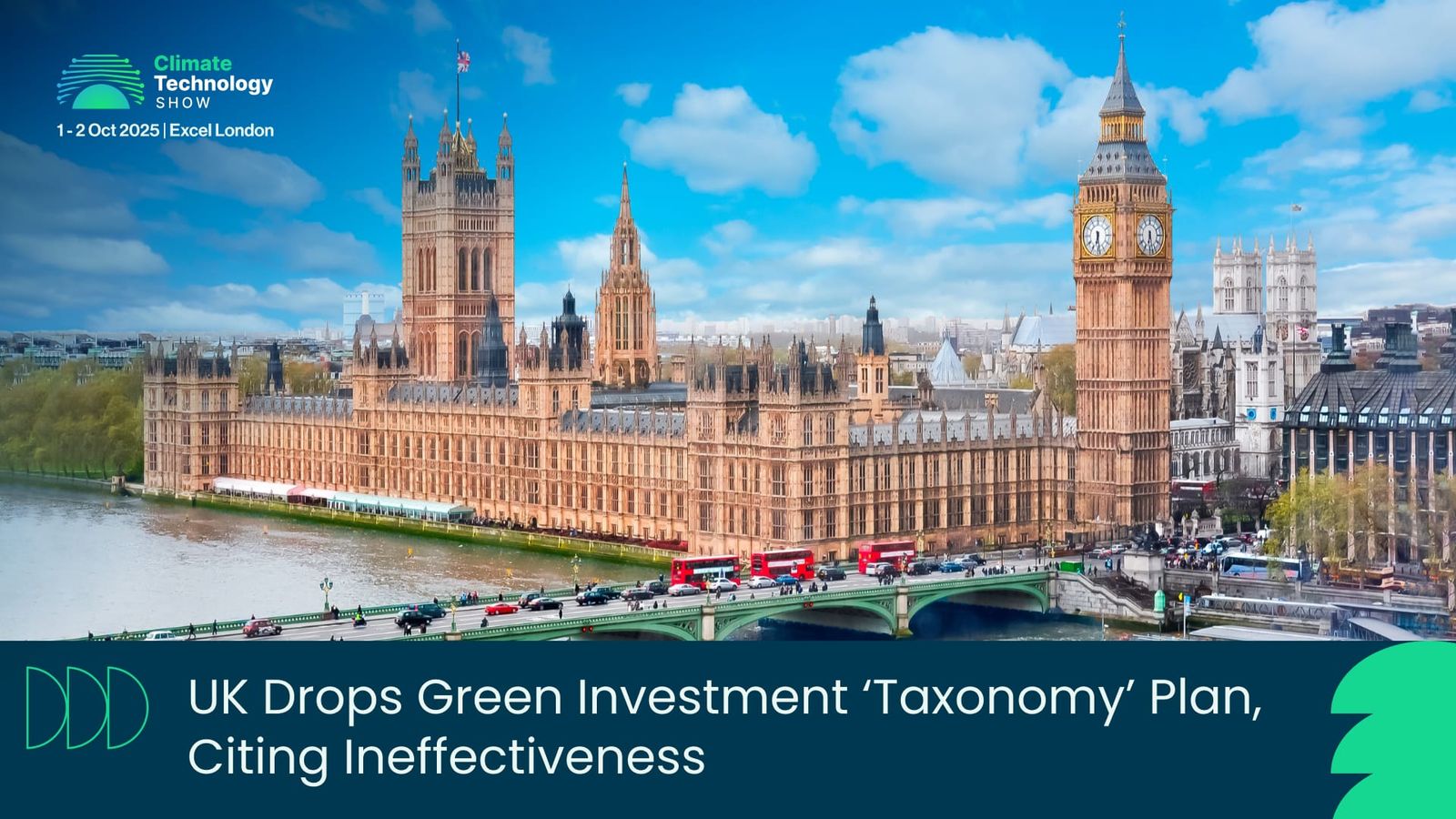
LONDON, July 15 – The UK government has officially scrapped its long-delayed plan to introduce a "taxonomy" aimed at helping companies and investors determine what qualifies as a green investment. The move marks a significant policy shift in the country's sustainable finance approach, signaling a broader hesitancy among governments toward complex sustainability reporting frameworks.
Originally intended to guide capital towards sustainable economic activities and support the UK’s net zero targets, the taxonomy was expected to serve as a key pillar of the government’s green finance strategy. However, after years of consultations and delays, the finance ministry concluded that the initiative would fall short of expectations.
According to the ministry, the taxonomy “would not be the most effective tool to deliver the green transition and should not be part of our sustainable finance framework.” Instead, the government will channel efforts into alternative green policies believed to more effectively mobilise sustainable investment.
Taxonomies have been promoted globally as a means of combating greenwashing and helping economies align financial flows with climate goals. But critics argue that they are often overly complex, difficult to implement, and less practical than intended.
The UK's decision comes as the European Union, which pioneered a similar taxonomy, undertakes a sweeping review of its own sustainability reporting regulations to reduce administrative burdens on companies and enhance competitiveness.
As part of its rationale, the UK government said feedback from stakeholders indicated the taxonomy would not meet its aims “in a proportionate way” and would not effectively support capital flows or address greenwashing concerns.
The decision was met with disappointment by the UK Sustainable Investment and Finance Association (UKSIF), which has long advocated for a robust sustainability framework.
“We now want to see swift delivery of commitments on transition plans and the sustainability reporting standards,” said Oscar Warwick Thompson, head of policy and regulatory affairs at UKSIF.
Britain initially proposed developing its own green taxonomy in 2020, following the EU’s lead. However, the effort was paused in December 2022, with the then-government citing the initiative’s complexity and its wide-reaching impact across various sectors.
Some in the investment industry welcomed the move. Gemma Woodward, head of responsible investment at wealth manager Quilter Cheviot, supported the decision, noting that firms are already grappling with a patchwork of existing regulations.
With the taxonomy now officially shelved, all eyes will be on how the UK government advances its other sustainability-related initiatives, including its planned transition plan disclosures and upcoming sustainability reporting standards.