
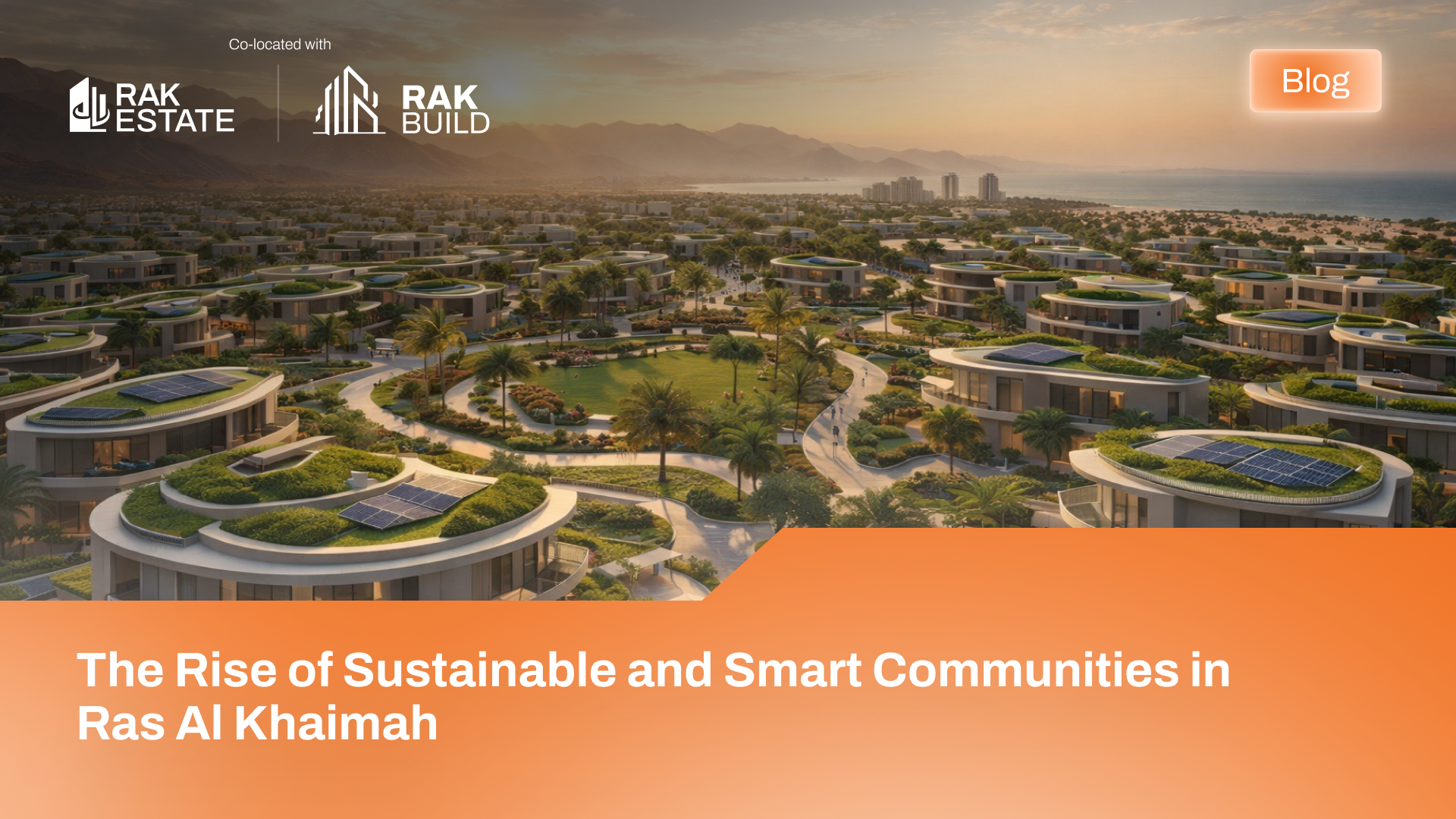
Ras Al Khaimah is moving from being a quiet northern emirate to a serious contender in the regional real estate and investment landscape. At the heart of this shift is a clear move toward sustainable and smart communities that support better quality of life, stronger investor confidence, and long term resilience. Instead of focusing only on individual buildings, RAK is increasingly planned around integrated neighborhoods that are greener, more efficient, and digitally connected.
For investors, developers, and policy makers, this evolution matters. Sustainable and smart communities tend to attract higher quality tenants, deliver better long term returns, and align closely with both UAE and global ESG expectations. As RAK Estate 2026 approaches, the conversation is no longer just about “what is being built” but “how it is being built and how it performs over time” for residents, businesses, and the environment.
Sustainability as a Core Development Principle
In Ras Al Khaimah, sustainability has moved from optional branding to a core principle of urban development. Developers are increasingly adopting energy efficient designs, water saving technologies, and environmentally conscious materials to meet both regulatory expectations and market demand. Residential and mixed use projects in the emirate now regularly incorporate features such as improved insulation, solar ready rooftops, and LED lighting to reduce overall consumption.
For residents, these measures translate into lower utility bills and more comfortable homes. For investors, they provide protection against future regulation and resource price shocks. A community designed around sustainability is also more likely to attract international tenants and institutional investors who must report on ESG metrics. In this sense, sustainable communities become financial assets as much as environmental commitments.
Green Spaces, Walkability, and Quality of Life
One of the most visible signs of RAK’s changing development model is the growing emphasis on public realm and green space. Instead of isolated towers surrounded by parking, new communities are being planned around landscaped promenades, parks, jogging tracks, and shaded walkways. This shift responds to a rising regional awareness that people are not only buying homes, they are buying lifestyles.
Walkable layouts, cycling paths, and community parks support healthier living and encourage social interaction. Families, in particular, look for neighborhoods where children can play safely, schools and retail are within easy reach, and traffic is calmer. For developers, this type of planning increases the overall appeal of a project and supports better long term occupancy. For the emirate, it contributes to a distinct identity focused on livability and nature, in contrast to more high density city environments.
Smart Infrastructure and Digital Connectivity
The other major pillar of RAK’s new communities is the growing use of smart technology. Smart communities rely on data and connectivity to operate more efficiently. This can begin with simple elements such as high speed fiber internet, smart metering for utilities, and app based facility management, and grow into more advanced features such as integrated security, lighting control, and predictive maintenance.
Digitally enabled buildings and public spaces make life easier for residents and tenants. They can pay service charges online, book amenities via mobile, track utility usage in real time, and receive updates from property managers instantly. For developers and operators, smart systems reduce operating costs, help detect issues before they become major problems, and generate data that can guide future design and investment decisions. In an increasingly competitive regional market, the ability to market a community as “smart ready” or “digitally enabled” is a clear differentiator.
ESG, Regulation, and Global Capital
Investors are paying closer attention to ESG performance in real estate than ever before. Environmental metrics such as energy intensity and carbon footprint, social measures such as community design and accessibility, and governance issues related to transparency and compliance all influence capital flows into markets and assets. Ras Al Khaimah’s move toward sustainable and smart communities aligns directly with this shift.
As the emirate updates building codes, energy efficiency guidelines, and master planning frameworks, developers who understand ESG standards will be better positioned to attract cross border investment. Institutional investors, family offices, and funds looking at RAK want clarity on how projects manage risk, use resources, and support long term stability. Sustainable and smart communities send a strong signal that the market is forward looking, well governed, and capable of meeting global expectations.
Tourism, Hospitality, and Mixed Use Integration
RAK’s tourism growth is another driver behind sustainable and smart community development. Coastal districts, island projects, and resort adjacent neighborhoods must appeal not only to residents, but also to visitors and hospitality brands. This encourages mixed use planning where hotels, serviced apartments, retail, and residential areas are integrated into coherent districts with consistent design language and infrastructure.
Smart mobility solutions such as ride sharing hubs, electric vehicle charging, and efficient wayfinding add to visitor experience and resident convenience. Sustainable landscaping, waste management, and water reuse reduce the environmental footprint of tourism heavy areas and support the emirate’s positioning as a nature rich destination. These elements, when combined, move RAK away from isolated resort enclaves toward fully fledged lifestyle communities that function year round.
Opportunities for Developers and Investors
The rise of sustainable and smart communities in Ras Al Khaimah creates several tangible opportunities for market participants. Developers can position themselves early as specialists in green building, smart infrastructure, or integrated master planning. Consultants and PropTech firms can bring solutions in energy management, data platforms, and digital twin technology. Investors can focus on early stage projects that embed sustainability and smart systems from the start, capturing potential value uplift as demand for such assets grows.
For existing property owners, there is also a growing retrofit and upgrade opportunity. Adding smart metering, improving insulation, integrating solar solutions, or redesigning landscape to reduce water use can all enhance asset performance and market positioning. In this way, sustainable and smart thinking does not apply only to new developments, but also to the transformation of RAK’s existing built stock.
How RAK Estate 2026 Fits Into the Story
RAK Estate 2026 provides a platform where developers, investors, urban planners, PropTech innovators, and government entities come together to discuss Ras Al Khaimah's real estate trajectory. The event connects market participants who are actively shaping sustainable and smart community development across the emirate.
For attendees, RAK Estate 2026 offers direct access to understand how leading players approach master planning, green building practices, and digital transformation in RAK's unique context. It is a chance to see how these concepts translate into actual projects, investment opportunities, and public-private partnerships. For those seeking to enter the market or expand their presence, the event facilitates valuable connections with decision-makers driving the emirate's next generation of communities.
Looking Ahead
The rise of sustainable and smart communities in Ras Al Khaimah is not a short term trend. It reflects structural changes in how people want to live, how investors evaluate real estate, and how cities compete for capital and talent. By prioritizing livability, efficiency, and innovation, RAK is steadily building a differentiated position within the UAE and wider region.
As more projects are launched and delivered, the emirate’s landscape will continue to shift toward integrated neighborhoods that balance environment, technology, and economic opportunity. For developers and investors who understand this direction, Ras Al Khaimah offers a clear runway for growth. For everyone else, events such as RAK Estate 2026 are the ideal starting point to learn, connect, and participate in shaping the next chapter of the emirate’s real estate journey.