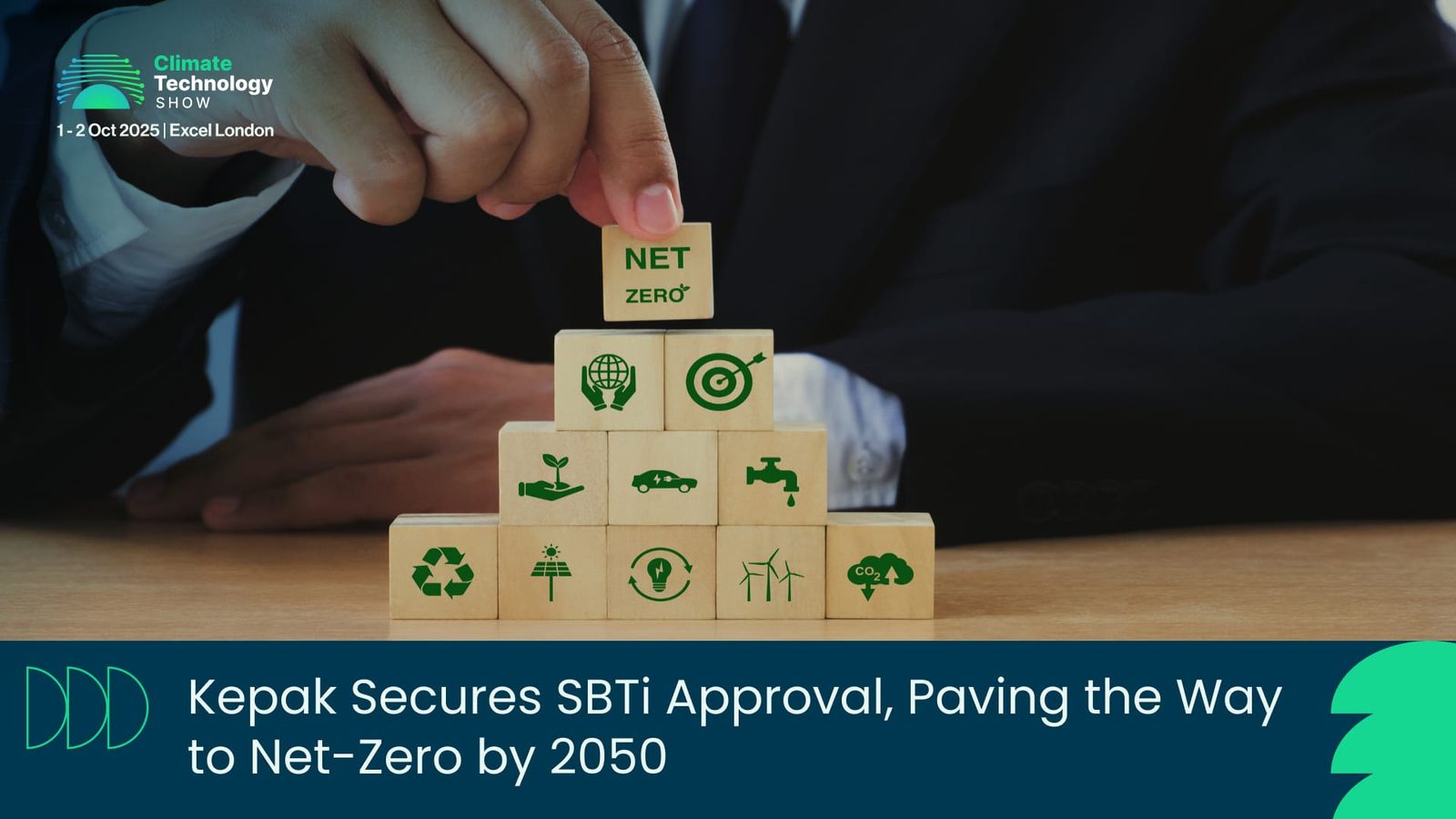
Kepak Secures SBTi Approval, Paving the Way to Net-Zero by 2050
Kepak Group has achieved a significant milestone on its climate journey, with its science-based emissions reduction targets formally approved by the Science Based Targets initiative (SBTi).
First published onLondon Climate Technology Show ↗
Dublin, Ireland - 10 June 2025: The SBTi validation confirms that Kepak’s climate targets align with the 1.5°C pathway outlined in the Paris Agreement – the most ambitious global benchmark for limiting climate change. With this approval, Kepak joins a select group of leading food industry players including McDonald’s, Tesco and Aldi in setting verified, science-aligned climate goals.
Ambitious Targets, Clear Commitment
Kepak’s near and long-term targets reflect its ambition to become a climate leader within the food processing sector:
- A 52.3% absolute reduction in Scope 1 and 2 greenhouse gas emissions by 2030 – equivalent to eliminating the annual emissions of over 15,000 homes.
- Net-zero emissions across its entire value chain by 2050.
“Our targets are not just numbers – they represent measurable, impactful action,” said Rebecca Thomson, Head of Sustainability at Kepak. “This is a proud moment for the entire team, and it’s just the beginning of what we aim to achieve.”
Proven Progress: Tracking Real Results
Between 2018 and 2024, Kepak has already made substantial progress across its operations and supply chain, laying the groundwork for long-term success:
- 40% reduction in Scope 1 & 2 emissions – Equivalent to removing over 21,000 petrol cars from the road for a year.
- 8% reduction in livestock emissions intensity (Scope 3) – Comparable to the carbon capture of nearly 300,000 mature trees annually.
- 29% reduction in water use per tonne of product – Saving enough water to fill more than 100 Olympic-sized swimming pools each year.
- 22% increase in regenerative agriculture practices – Enhancing soil health and biodiversity across beef farms in Ireland and the UK.
“Kepak is leading by example,” said Tiphaine Aires, Associate Director at the Carbon Trust. “The team’s work demonstrates the vital role of processors in driving farm-level decarbonisation and building a more sustainable food system.”
Looking Ahead: Pathway to Net-Zero
Kepak’s roadmap includes ambitious goals for the coming decades, backed by a clear decarbonisation strategy:
By 2030:
- 52.3% absolute reduction in Scope 1 & 2 emissions
- 50.4% reduction in Scope 3 (non-agricultural emissions) – Equivalent to removing over 25,000 petrol cars from the road each year
- 36.37% reduction in agricultural emissions (FLAG), with zero deforestation across supply chains by 2025
By 2050:
- 90% absolute reduction across Scope 1, 2 and 3 emissions
- Net-zero emissions across the entire value chain
Decarbonisation in Action
To meet these targets, Kepak is implementing a wide-ranging suite of sustainability initiatives:
- Expansion of renewable energy sources, including wind, solar, and anaerobic digestion
- Deployment of heat pumps and site-wide energy retrofitting
- Increased investment in on-farm carbon reduction programmes
With SBTi approval now secured, Kepak is poised to accelerate its climate strategy while supporting the wider transition to a low-carbon, resilient global food system.