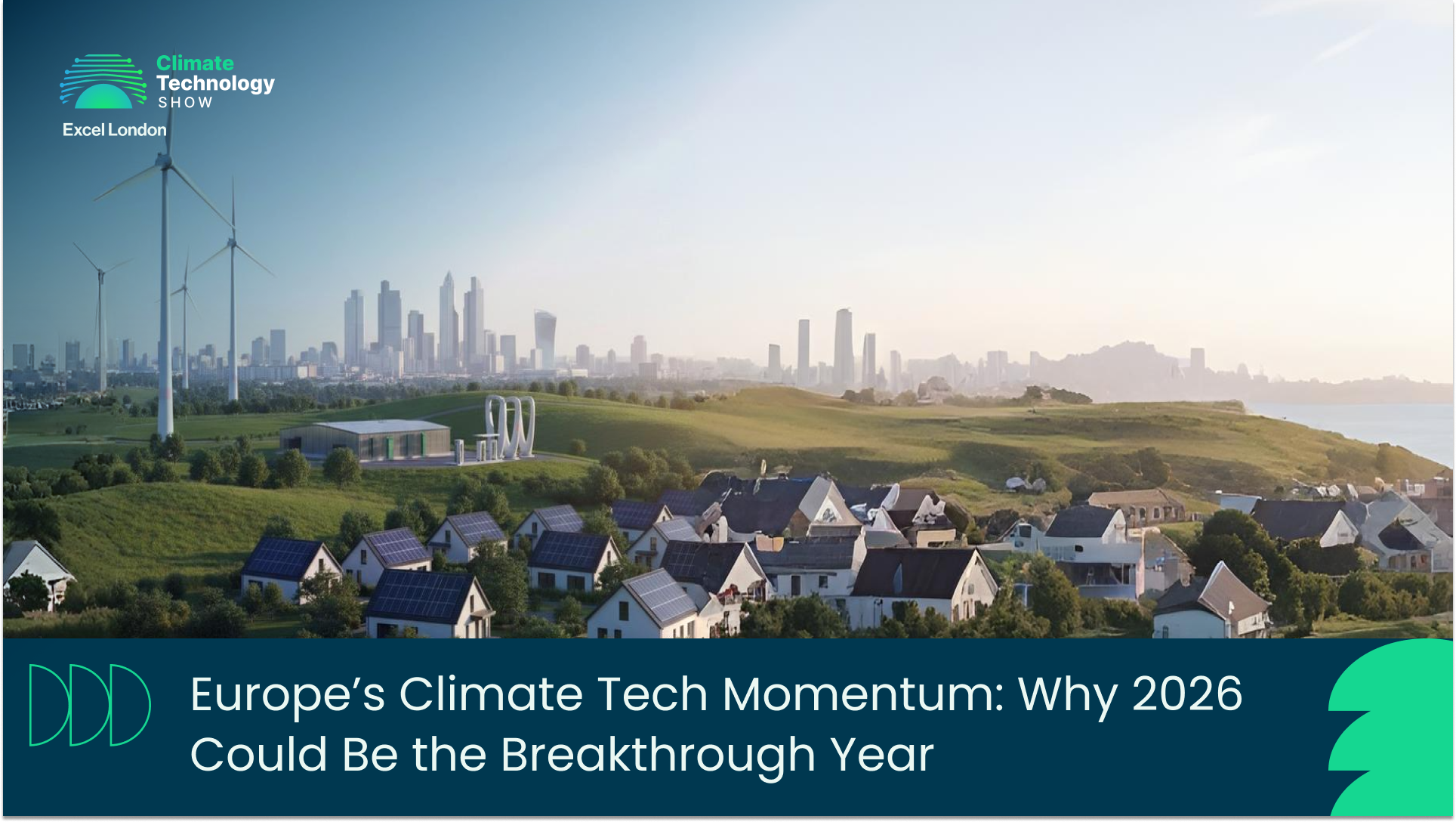
As 2025 comes to an end, Europe’s climate technology sector stands at the threshold of a transformative year, ready to convert years of innovation, investment, and collaboration into measurable impact. Over the past two years, the region has laid strong foundations for long-term success through clear policy direction, sustained public investment, and a growing network of innovators and partners. With these elements now firmly in place, 2026 is shaping up to be the year when Europe’s climate technology ambitions move decisively from strategy to action, delivering real progress across energy, mobility, and industrial sectors.
Rather than pursuing rapid and fragmented growth, Europe has taken a deliberate approach to climate innovation. That approach is now creating the conditions for lasting impact across energy, industry, mobility, and infrastructure.
Policy Confidence Is Driving Climate Technology Forward
A key indicator of Europe’s climate technology readiness is the EU Net Zero Industry Act. Part of the European Green Deal, the Act enhances Europe’s capacity to produce and deploy critical clean technologies, offering faster project approvals, clearer regulatory pathways, and long-term certainty for technology developers and investors.
As 2025 draws to a close, this policy clarity is strengthening confidence across Europe’s climate technology ecosystem. Companies are preparing to expand, manufacturers are increasing capacity, and governments are aligning national strategies with shared European goals. In 2026, the full implementation of this framework is expected to accelerate deployment and further establish Europe as a global leader in climate technology.
Sustained Investment Is Unlocking Scale
Europe’s climate ambitions are backed by strong financial commitment. The European Investment Bank has steadily increased its support for climate and environmental projects, directing a substantial portion of its annual financing toward the green transition. This long-term investment underpins vital areas including renewable energy, grid modernisation, clean transport, and industrial decarbonisation.
At the same time, European funding programmes like the Innovation Fund are helping promising technologies move from demonstration to commercial scale. As a result, many solutions that gained traction in 2024 and 2025 are now ready for wider deployment. By 2026, this growing pipeline of funded projects is expected to deliver real-world impact across multiple sectors and regions.
Collaboration Across Europe Is Strengthening the Ecosystem
Another positive shift in Europe’s climate technology journey is the rise of cross-border collaboration. Climate solutions are increasingly developed, tested, and deployed through partnerships that span countries and industries. This cooperative approach is helping reduce duplication, share expertise, and accelerate market access for new technologies.
By the end of 2025, Europe’s climate tech ecosystem will have become more connected and more resilient. Shared standards, coordinated funding, and regional partnerships are making it easier for solutions to scale beyond local markets. In 2026, this collaborative strength is expected to support faster adoption and stronger outcomes across the continent.
Looking Ahead to 2026
What makes 2026 stand out is the alignment of readiness, resources, and intent. Policy frameworks are moving into action, investment is flowing with long-term confidence, and collaboration is becoming a defining strength of Europe’s climate technology landscape.
Together, these factors point to a year where innovation moves decisively into implementation. Europe is well-positioned to translate climate ambition into measurable progress while strengthening economic resilience and industrial competitiveness.
As Europe closes out 2025, the climate technology sector stands on strong foundations built through thoughtful policy, sustained investment, and shared collaboration. With momentum firmly established, 2026 has the potential to mark a turning point where climate technologies scale faster, deliver broader impact, and play a central role in Europe’s transition to a sustainable future.
Rather than asking whether climate technology can lead the transition, Europe is now focused on delivering that leadership with confidence.