Europe’s Acceleration to Green Shift: A Smarter and Cleaner Future Ahead
First published onEuro EV Show ↗
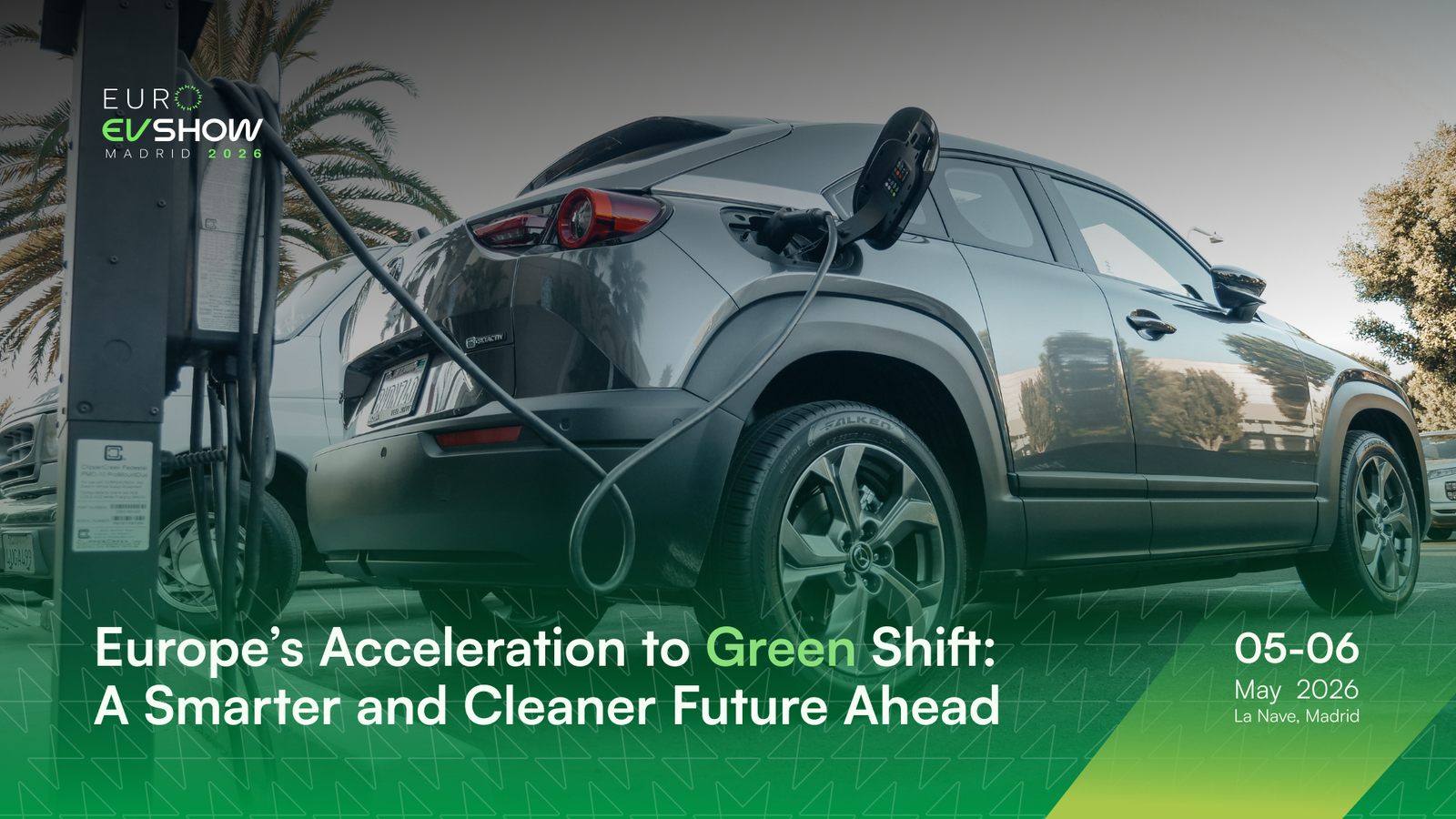
The European Union is advancing rapidly in its shift toward electric mobility, with sustainability now playing a key role in both economic and environmental strategies. Over the past three years, the number of public EV charging points has tripled, driven by targeted investments, aligned policy initiatives and strong collaboration between governments and private sector partners. This progress represents a pivotal moment in the EU’s journey toward a seamless, accessible, and fully integrated electric vehicle charging network.
AFIR: Driving the Infrastructure Revolution
Central to this transformation is the Alternative Fuels Infrastructure Regulation (AFIR), which plays a key role in shaping the future of EV charging across the EU. This landmark legislation mandates the rollout of charging stations at regular intervals along major roads, ensuring that no electric vehicle driver is ever far from a reliable charge. It also sets binding targets for each Member State to match the pace of EV adoption with charging deployment.
AFIR not only sets ambitious goals but also offers certainty to investors and manufacturers, unlocking billions in clean transport financing.
Innovation is Supercharging Europe’s Grid
EV infrastructure is no longer just about plug-and-charge. Europe is moving towards a more intelligent and interconnected future.
- AI-driven load management to optimise power use across the grid.
- Intelligent charging technologies that optimise energy usage while minimising costs.
- V2G technology empowers electric vehicles to feed surplus energy back to the grid.
- Ultra-fast and megawatt charging to support commercial vehicles and freight corridors.
These technologies not only make EV driving more convenient but help stabilise the electricity grid, especially as more renewable energy sources come online.
Heavy Transport and Rural Inclusion
Beyond cities and personal vehicles, the EU is working hard to electrify heavy transport and reach underserved areas. This includes:
- Establishing megawatt charging stations for electric trucks, a crucial step toward decarbonising freight and logistics.
- Deploying chargers in rural and remote regions, ensuring a fair and inclusive green transition.
- Supporting multi-fuel hubs at ports and logistic centres to smooth the shift to zero-emission delivery.
The EU is streamlining regulations, eliminating administrative hurdles, and promoting cross-border collaboration. Member States are being supported through technical guidance and co-financing mechanisms such as the Connecting Europe Facility (CEF) and the Innovation Fund, both of which are helping to build thousands of new charging stations across the continent.
Jobs Industry and the Green Economy
This charging revolution is also a major job creator. From civil engineering to software development and EV servicing, thousands of high-quality green jobs are being generated across Europe.
The expansion of infrastructure is also boosting the European battery value chain, supporting domestic manufacturing and reducing reliance on imports which is an important step in securing Europe's technological sovereignty.
With a clear roadmap, robust regulations, and a surge of clean-tech innovation, Europe is rapidly becoming the global benchmark for EV infrastructure development. The coordinated effort among governments, industries, and citizens ensures that the shift to zero-emission transport is equitable, efficient, and economically sound.
As we move deeper into 2025, the EU’s commitment to sustainable transport infrastructure is more than just a climate imperative but a bold investment in a smarter, cleaner, and more resilient future for all Europeans.