European Union Passes ReFuelEU: A Landmark Green Fuel Legislation

First published onLondon Climate Technology Show ↗
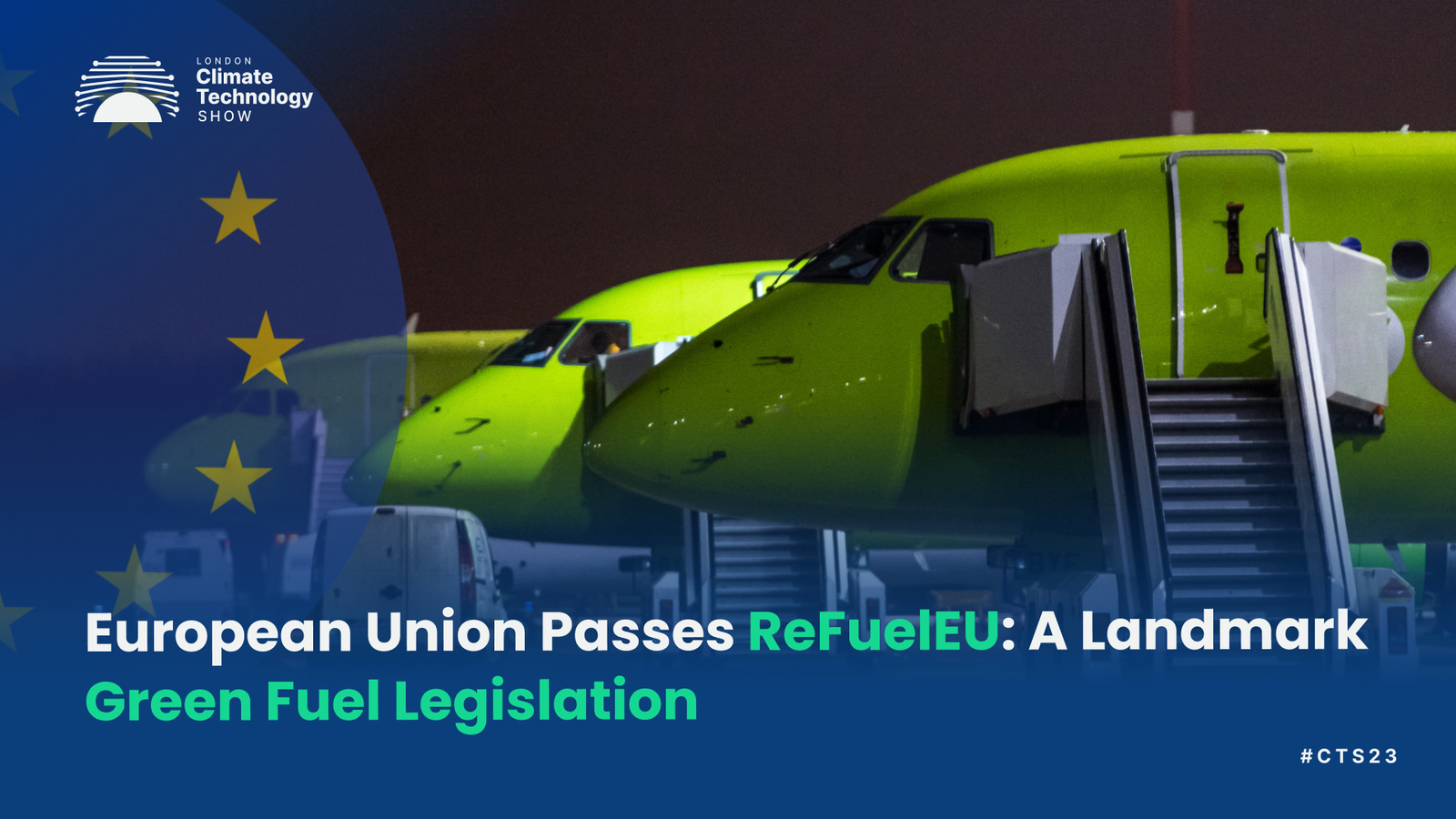
April 26, 2023: Negotiators from the European Union reached an agreement to decarbonise the aviation sector, with the goal of reducing heat-trapping emissions by increasing the scope of the region's green aviation fuel market. The deal, known as ReFuelEU, will require all flights departing from an EU airport to uplift a minimum share of Sustainable Aviation Fuels (SAF), starting at 2% in 2025. By 2030, this percentage will rise to 6%, and gradually increase to 70% by 2050.
The mandate includes requirements for synthetic fuels, with the likes of e-kerosene, which are the only type of SAFs that can sustainably meet the fuel demands of the aviation sector. Negotiators agreed to a 1.2% synthetic fuel mandate between 2030 and 2031 and 2% between 2032 and 2035, which is a significant increase from the European Commission's initial proposal of 0.7% between 2030 and 2035. This is a major win for the European Parliament and a promising step towards decarbonising the aviation sector.
“In a historic amendment, the non-CO₂ effects of aviation have been included in the final agreement. Non-CO₂ emissions account for two-thirds of aviation’s climate impact, but efforts to legislate them in the past were unsuccessful. The agreement opens the door to regulating the quality of the fuel to ensure it has lower aromatic concentrations and sulphur content, which is a significant step towards reducing the non-CO₂ climate impacts in aviation and improving air quality around airports”, reports an official media release by T&E (Transport & Environment), Europe’s leading clean transport campaign group.
Matteo Mirolo, Aviation Manager at T&E, said, “This pioneering deal is an unwavering endorsement of the world’s largest green fuel mandate for aviation. The EU doubled down on synthetic fuels, which are key to decarbonising the sector, and limited the use of unsustainable biofuels in planes.”
Overall, the ReFuelEU deal is a promising step towards decarbonising the aviation sector and reducing its non-CO₂ climate impacts. It provides airlines with a certainty that synthetic kerosene will become more affordable and readily available, allowing the ramp-up of SAFs to commence. However, there is still more work to be done to ensure the success of SAFs and stronger safeguards are necessary to ensure the transition towards sustainable biofuels.